
Prophecies fulfilled in Matthew
Work in progress. This study is not yet complete.
Prophecies fulfilled in Matthew
Working research notes
THIS ONE NEEDS TO BE FIXED: ADD BACK IN IMAGES!
Matthew 26:55 prophecy fulfilled “56 But all this was done, that the scriptures of the prophets might be fulfilled.” How many scriptures were fulfilled here? Just the one that Jesus referenced; about being betrayed into the hand of sinners, or are there more?
This is a good “plural wording” question. I’ll treat Matthew 26:56 as wider than one isolated proof text, but still keep it anchored to the arrest scene itself rather than dragging in every crucifixion prophecy.
Thought for 24s
More than one.
Matthew 26:56 is not saying, “This one sentence fulfilled one verse.” It says:
“But all this was done, that the scriptures of the prophets might be fulfilled.” — Matthew 26:56
That phrase “all this” points to the whole arrest scene: Judas’ betrayal, the armed crowd, Jesus refusing violent defense, His submission, being treated like a criminal, and the disciples fleeing.
The clearest immediate fulfillment is the one Jesus had just quoted earlier:
“Awake, O sword, against my shepherd, and against the man that is my fellow, saith the LORD of hosts: smite the shepherd, and the sheep shall be scattered…” — Zechariah 13:7
Jesus applies that directly:
“All ye shall be offended because of me this night: for it is written, I will smite the shepherd, and the sheep of the flock shall be scattered abroad.” — Matthew 26:31
And then Matthew 26:56 immediately says:
“Then all the disciples forsook him, and fled.”
So Zechariah 13:7 is the most direct, immediate fulfillment in Matthew 26:56.
But there are more prophetic ropes in the scene.
Judas’ betrayal by one close to Him connects with passages like:
“Yea, mine own familiar friend, in whom I trusted, which did eat of my bread, hath lifted up his heel against me.” — Psalm 41:9
John explicitly applies that to Judas in John 13:18, so it is not a weak connection.
The thirty pieces of silver and betrayal-price connect with:
“So they weighed for my price thirty pieces of silver.” — Zechariah 11:12
Matthew later ties that betrayal-money sequence to fulfillment in Matthew 27:9–10.
Jesus being seized while innocent, yet not resisting, connects strongly with Isaiah 53:
“He was oppressed, and he was afflicted, yet he opened not his mouth…” — Isaiah 53:7
And:
“He was taken from prison and from judgment…” — Isaiah 53:8
That fits the arrest scene: Jesus does not call twelve legions of angels, does not resist, and submits to being taken.
Then Matthew 26:55 says:
“Are ye come out as against a thief with swords and staves for to take me?”
That connects with Isaiah 53:12:
“...he was numbered with the transgressors…”
Luke makes that connection even more explicit in the same arrest-night context:
“For I say unto you, that this that is written must yet be accomplished in me, And he was reckoned among the transgressors...” — Luke 22:37
So the answer is: not just one Scripture.
A careful count would be:
1. Zechariah 13:7 — Shepherd smitten, sheep scattered.
2. Psalm 41:9 — Betrayed by familiar friend.
3. Zechariah 11:12–13 — Thirty pieces of silver betrayal-price.
4. Isaiah 53:7–8 — Innocent Servant taken, silent, non-resistant.
5. Isaiah 53:12 — Treated/reckoned among transgressors.
6. Likely broader righteous-sufferer passages such as Psalm 35 / Psalm 69, where the righteous one is hated without cause.
So Matthew’s phrase “the scriptures of the prophets” is plural on purpose. Jesus is not merely saying, “This one betrayal sentence came true.” He is saying the entire prophetic pattern is now converging: the Shepherd is being struck, the sheep are scattering, the friend has betrayed Him, the innocent Servant is being taken, and He is being treated as a criminal so the written purpose of God can be fulfilled.
Are there more verses in the Old Testament regarding this scene?
The important guardrail is this: some Old Testament texts are direct arrest-scene anchors, while others are righteous-sufferer patterns that become clearer once the whole Passion unfolds. I’ll separate those so we don’t overclaim.
Thought for 24s
Yes. There are more Old Testament verses tied to this arrest scene, but they fall into different strength levels.
The scene in Matthew 26:47–56 includes several pieces:
Judas betrays Him. A close companion comes with a hostile crowd. The crowd comes with swords and staves. Jesus is treated like a criminal. Jesus refuses violent rescue. Jesus submits to being taken. The disciples flee. All of this happens so “the scriptures of the prophets” are fulfilled.
1. The clearest direct verse: the Shepherd struck, the sheep scattered#
This is the strongest anchor because Jesus already quoted it earlier in the same chapter.
“Awake, O sword, against my shepherd, and against the man that is my fellow, saith the LORD of hosts: smite the shepherd, and the sheep shall be scattered…” — Zechariah 13:7
Jesus quotes this in Matthew 26:31, and then Matthew 26:56 says:
“Then all the disciples forsook him, and fled.”
So this one is not merely possible. It is directly fulfilled in the arrest scene.
2. Betrayal by a familiar friend#
Judas is not a stranger. He is one of the Twelve. That connects strongly with:
“Yea, mine own familiar friend, in whom I trusted, which did eat of my bread, hath lifted up his heel against me.” — Psalm 41:9
John 13:18 directly applies this to Judas, so this is a strong fulfillment rope.
Psalm 55 also fits the emotional and covenantal nature of the betrayal:
“For it was not an enemy that reproached me; then I could have borne it… But it was thou, a man mine equal, my guide, and mine acquaintance. We took sweet counsel together, and walked unto the house of God in company.” — Psalm 55:12–14
And later:
“He hath put forth his hands against such as be at peace with him: he hath broken his covenant. The words of his mouth were smoother than butter, but war was in his heart…” — Psalm 55:20–21
That fits Judas’ kiss and friendly approach while bringing the arresting party.
3. The betrayal-price: thirty pieces of silver#
This is not completed in Matthew 26:55–56 itself, but it belongs to the same betrayal chain.
“So they weighed for my price thirty pieces of silver.” — Zechariah 11:12
And:
“Cast it unto the potter: a goodly price that I was prised at of them.” — Zechariah 11:13
Matthew later ties the betrayal money and potter-field sequence to fulfillment in Matthew 27:9–10.
4. Treated like a criminal / numbered with transgressors#
Jesus says:
“Are ye come out as against a thief with swords and staves for to take me?” — Matthew 26:55
That connects with Isaiah 53:
“...he was numbered with the transgressors…” — Isaiah 53:12
Luke makes this especially clear in the arrest-night context:
“For I say unto you, that this that is written must yet be accomplished in me, And he was reckoned among the transgressors...” — Luke 22:37
So when they come against Jesus as though He were a robber, rebel, or violent criminal, Isaiah 53:12 is being filled out.
5. Innocent, silent, non-resistant Servant#
Jesus does not fight, does not call the angels, and does not resist arrest. That fits:
“He was oppressed, and he was afflicted, yet he opened not his mouth…” — Isaiah 53:7
And:
“He was taken from prison and from judgment…” — Isaiah 53:8
This is one of the strongest Passion-pattern texts. It does not only speak of the cross; it also fits the moment where the innocent Servant allows Himself to be seized.
6. The righteous sufferer surrounded by the wicked#
Psalm 22 is more directly fulfilled at the crucifixion, but part of its pattern begins here: the righteous one is surrounded by hostile men.
“Many bulls have compassed me: strong bulls of Bashan have beset me round.” — Psalm 22:12
“For dogs have compassed me: the assembly of the wicked have inclosed me…” — Psalm 22:16
That fits the arrest mob surrounding Jesus, though Psalm 22 becomes even clearer at the cross.
7. Counsel taken against the LORD’s Anointed#
Psalm 2 is a major messianic legal-text. It says:
“The kings of the earth set themselves, and the rulers take counsel together, against the LORD, and against his anointed…” — Psalm 2:2
Acts 4 applies this directly to the conspiracy against Jesus involving rulers, Gentiles, Israel, Herod, and Pilate. So Psalm 2 covers the larger arrest-trial-crucifixion conspiracy.
8. Secret counsel and plotting to take His life#
Several Psalms describe the righteous one being plotted against.
“For I have heard the slander of many: fear was on every side: while they took counsel together against me, they devised to take away my life.” — Psalm 31:13
That fits the background leading into the arrest: the priests and elders had already plotted to take Jesus by subtlety and kill Him.
Also:
“The wicked plotteth against the just, and gnasheth upon him with his teeth.” — Psalm 37:12
And:
“Hide me from the secret counsel of the wicked; from the insurrection of the workers of iniquity.” — Psalm 64:2
These are not as direct as Zechariah 13:7 or Isaiah 53, but they belong to the righteous-sufferer pattern.
9. False witnesses rising up#
This happens immediately after the arrest, during the trial.
“False witnesses did rise up; they laid to my charge things that I knew not.” — Psalm 35:11
Matthew 26:59–60 says:
“Now the chief priests, and elders, and all the council, sought false witness against Jesus, to put him to death; But found none: yea, though many false witnesses came…”
So Psalm 35 is not mainly the arrest moment, but it belongs to the same arrest-night fulfillment chain.
10. Hated without cause#
This also belongs to the broader Passion scene.
“They that hate me without a cause are more than the hairs of mine head…” — Psalm 69:4
And:
“Neither let them wink with the eye that hate me without a cause.” — Psalm 35:19
John 15:25 applies this category to Jesus:
“They hated me without a cause.”
So the arrest is not lawful justice against evil. It is the wicked seizure of the righteous one.
11. The “cup” Jesus accepts#
Earlier in Matthew 26, Jesus prays:
“O my Father, if it be possible, let this cup pass from me…” — Matthew 26:39
That “cup” language has Old Testament judgment background.
“For in the hand of the LORD there is a cup, and the wine is red…” — Psalm 75:8
“Awake, awake, stand up, O Jerusalem, which hast drunk at the hand of the LORD the cup of his fury…” — Isaiah 51:17
“Take the wine cup of this fury at my hand, and cause all the nations… to drink it.” — Jeremiah 25:15
So when Jesus submits to arrest, He is also submitting to the cup appointed by the Father.
12. The sword awakened against the Shepherd#
Zechariah 13:7 deserves to be noticed twice, because it does more than predict scattered disciples. It begins:
“Awake, O sword, against my shepherd…”
In Matthew 26, literal swords appear in the hands of the arresting crowd, and Peter takes up a sword. But Jesus refuses the sword as His defense. The deeper sword is the appointed judgment against the Shepherd.
That is why Jesus says:
“But how then shall the scriptures be fulfilled, that thus it must be?” — Matthew 26:54
And then:
“But all this was done, that the scriptures of the prophets might be fulfilled.” — Matthew 26:56
Clean answer#
So, yes, there are more Old Testament verses involved.
The strongest ones for the Matthew 26 arrest scene are:
Zechariah 13:7 — Shepherd struck, sheep scattered. Psalm 41:9 — familiar friend betrays Him. Psalm 55:12–14, 20–21 — companion betrayal with smooth words and war in the heart. Zechariah 11:12–13 — thirty pieces of silver betrayal-price. Isaiah 53:7–8 — silent, non-resistant Servant taken. Isaiah 53:12 — numbered/reckoned with transgressors. Psalm 2:1–2 — rulers take counsel against the LORD’s Anointed. Psalm 31:13 — counsel taken to take away His life. Psalm 35:11 — false witnesses rise up. Psalm 69:4 / Psalm 35:19 — hated without cause. Psalm 22:12–16 — righteous sufferer surrounded by the wicked. Psalm 75:8 / Isaiah 51:17 / Jeremiah 25:15 — the cup of divine judgment.
So Matthew 26:56 is very likely plural on purpose. The arrest is not fulfilling only one verse. It is a convergence scene: the betrayed Friend, the smitten Shepherd, the scattered sheep, the innocent Servant, the righteous sufferer, the rejected Anointed, and the One who willingly receives the cup.
Is there a picture type here where the lamb is taken to the door of the garden as a mirror of the fulfillment where Seth would bring his sacrifice to the door of the garden and to the way where the two cherubim are? And would this also reflect forward where the lamb is brought by the sinner to the priest, and the priest would then take possession of the lamb and take it from the door inward?
I think the answer is yes as a pattern-picture, but I would keep one guardrail: Genesis does not explicitly say Abel/Seth brought the animal to the garden gate. The strength is in the repeated “door/way/cherubim/approach” pattern that later becomes explicit in the tabernacle.
Thought for 25s
Yes — as a picture-type / contemplative pattern, I think this is a strong rope.
But I would phrase it carefully:
Genesis does not explicitly say Abel or Seth brought a lamb to the door of Eden. The text does say God placed cherubim and a flaming sword at the east of the garden “to keep the way of the tree of life”:
“So he drove out the man; and he placed at the east of the garden of Eden Cherubims, and a flaming sword which turned every way, to keep the way of the tree of life.” — Genesis 3:24
Then, in Genesis 4, Cain and Abel bring offerings “unto the LORD”:
“And in process of time it came to pass, that Cain brought of the fruit of the ground an offering unto the LORD. And Abel, he also brought of the firstlings of his flock and of the fat thereof.” — Genesis 4:3–4
So the explicit text gives us:
1. Man is outside the garden.
2. The way back to life is guarded.
3. Cherubim are stationed at the boundary.
4. Offerings are brought “unto the LORD.”
5. Abel brings from the flock.
6. God has respect unto Abel and his offering.
The text does not directly say, “Abel brought the lamb to the east gate of Eden.” But the picture is very reasonable to contemplate because later Scripture makes the approach-pattern much clearer.
Also, I would probably say Abel rather than Seth, unless you mean the Sethite line continuing the true worship pattern. Abel is the explicit sacrifice-bringer in Genesis 4. Seth’s line is connected with calling on the name of the LORD:
“And to Seth, to him also there was born a son; and he called his name Enos: then began men to call upon the name of the LORD.” — Genesis 4:26
So the safest wording would be:
Abel gives us the first explicit flock-offering picture. Seth’s line may represent the continuation of calling upon the LORD outside Eden.
The picture-type#
The pattern would look like this:
Outside Eden, man cannot simply walk back into life. The way is guarded. The cherubim stand at the boundary. So the sinner does not enter by personal right. Something must be brought before the LORD.
That later becomes very visible in the tabernacle system.
“If his offering be a burnt sacrifice of the herd, let him offer a male without blemish: he shall offer it of his own voluntary will at the door of the tabernacle of the congregation before the LORD.” — Leviticus 1:3
Then:
“And he shall put his hand upon the head of the burnt offering; and it shall be accepted for him to make atonement for him.” — Leviticus 1:4
Then:
“And he shall kill the bullock before the LORD: and the priests, Aaron’s sons, shall bring the blood, and sprinkle the blood round about upon the altar…” — Leviticus 1:5
That is very close to what you are seeing.
The sinner brings the animal to the door. The sinner identifies with the sacrifice by laying his hand on its head. The animal is killed before the LORD. Then the priest takes up the blood-work. The priest handles what the sinner cannot carry inward by himself.
So the movement is:
sinner outside → substitute brought to the door → priest receives/takes up the blood-work → blood moves inward before God.
That is a very strong tabernacle mirror of the Eden problem.
The cherubim connection becomes even stronger#
In Eden, cherubim guard the way back to life.
In the tabernacle, cherubim are woven into the veil:
“And thou shalt make a vail… and cherubims shall it be made.” — Exodus 26:31
Behind that veil is the Most Holy Place, the ark, the mercy seat, and the cherubim:
“And there I will meet with thee, and I will commune with thee from above the mercy seat, from between the two cherubims…” — Exodus 25:22
So the tabernacle is almost like a structured replay of Eden:
outside place → door/gate → altar/blood → priestly mediation → veil with cherubim → presence of God.
The way back is not casual. It is guarded. It requires blood, priesthood, and God’s appointed approach.
Then Jesus fulfills and transforms the whole picture#
Now bring that back to Matthew 26.
Jesus is in a garden — Gethsemane. He is the Lamb. He is betrayed by sinners. He is taken by an armed crowd. He refuses violent defense. He is delivered into the hands of sinners. He is brought to the priests. The priests, in wickedness, take possession of Him for death.
Jesus says:
“The Son of man is betrayed into the hands of sinners.” — Matthew 26:45
And:
“Are ye come out as against a thief with swords and staves for to take me?” — Matthew 26:55
Then:
“But all this was done, that the scriptures of the prophets might be fulfilled.” — Matthew 26:56
Here is the powerful inversion:
In Leviticus, the sinner brings the lamb to the priest.
In Matthew 26, sinners come into the garden and seize the true Lamb, then deliver Him to the priests.
They think they are taking Him unlawfully.
But in the deeper purpose of God, the Lamb is willingly submitting to be offered.
“He was oppressed, and he was afflicted, yet he opened not his mouth: he is brought as a lamb to the slaughter…” — Isaiah 53:7
And John had already identified Him:
“Behold the Lamb of God, which taketh away the sin of the world.” — John 1:29
But here is the greater fulfillment#
Jesus is not only the Lamb brought forward.
He is also the true Priest.
The earthly priests take possession of Him in wickedness, but they do not understand that He is the real High Priest who will carry His own blood-work into the heavenly presence.
Hebrews says:
“But Christ being come an high priest of good things to come… Neither by the blood of goats and calves, but by his own blood he entered in once into the holy place, having obtained eternal redemption for us.” — Hebrews 9:11–12
So the full pattern becomes:
Eden: the way to life is guarded by cherubim. Abel: a flock-offering is brought unto the LORD outside Eden. Tabernacle: the sinner brings the sacrifice to the door; the priest takes up the blood-work inward. Matthew 26: the true Lamb is seized in a garden and delivered to the priests. Hebrews: the true Priest carries His own blood into the true holy place. Result: the way back to God is opened.
That is why Hebrews says:
“Having therefore, brethren, boldness to enter into the holiest by the blood of Jesus, By a new and living way…” — Hebrews 10:19–20
That word way is a major rope back to Genesis 3:24:
“to keep the way of the tree of life.”
So, yes, the picture is very rich:
The lamb at the door. The guarded way. The cherubim. The priest taking the blood inward. The sinner unable to enter by himself. The true Lamb and true Priest opening the way back to life.
I would just keep the wording disciplined:
We cannot prove from Genesis alone that Abel or Seth physically brought the lamb to the door of Eden, but the later tabernacle pattern strongly illuminates the possibility: worship happens outside the barred way, sacrifice is brought before the LORD, the door becomes the threshold of approach, cherubim mark guarded access, and only God’s appointed sacrifice and priesthood can carry the sinner’s case inward. Matthew 26 then fulfills this in shocking form: sinners seize the Lamb in a garden and deliver Him to the priests, while Jesus willingly becomes both the offering and the Priest who opens the way back to life.
I kind of hate that you can't look at previous chats, because we've actually been through this multiple times, and it's been locked, and it's frustrating that you can't see it. But it's not your fault. It's the way you're written and the way you operate. So, specifically, Yahweh says to Cain, when talking to Cain, he says, Sin is crouching at the door. And that is at a moment that Cain is bringing his offering to the door, to the entryway of Eden, where the angels are. And then Yahweh goes on to say, well, can you not also be accepted if you bring the right kind of atonement, is kind of the idea. And this is right after Adam and Eve, an animal is slain and given to them as a covering that God places over them. So there's some picture types here that are not explicit, but implicit that God teaches mankind substitutional sacrifice for a temporary covering as a picture type, a first fruit of a later covering of righteousness, not of the blood or of the slain animal. So the picture I'm seeing here is because of mankind's wickedness, we have to bring a slain animal. And wickedness, there's like 18 words for wicked. So I should say our predispositioned sin that leads to desire, and when desire gives birth to sin, sin gives birth to death. And therefore, as sinful creatures, we are like The violent ones, because there is no distinguishing between sin, God sees all sin as the same, and so, I hate I have to spill all this out, otherwise you'll correct me. So, we as the sinner, representing separate and fallen beings, would bring a lamb in the Israelite time before Jesus died, to the priest, and then the priest would take the animal into the tabernacle space where there would be eventually a sacrifice that is made. So, what I'm trying to see is, can we, through the specific mapping that Matthew, Mark, Luke, John are giving us in the account, is there any one author or the combinations of authors giving us the picture type through inspiration of the Holy Spirit, in my opinion, that we are seeing a scene that isn't just places named without reason, but rather, they're demonstrating the sequence of the lamb that was brought to the door and brought inside by the priest, because that would be kind of step one. The tabernacle was anointed by oil, and we went over this in a previous study, that when the woman put the oil over Jesus' head, he said it was for his burial, but we talked about, and you agreed with, the manifold wisdom of God was doing additional things at the same time. The anointing of the temple was a picture type, because Jesus is the temple, which the anointing of the tabernacle with oil, same thing. Before it can go into service, it was anointed with oil. Then also, the priest was anointed with oil before he could go into service, and then the king was anointed with oil before he could go into service. So, now that the woman anointed Jesus, fulfilling three concurrent picture types that are not explicit, but the... Jesus is now the anointed tabernacle. He's the anointed priest. He's the anointed king. And now he goes to the garden, and at the garden, he is the door, and the priests are now going to take him inside the city, which I don't know if they actually enter through the temple, if they took a path or a shortcut that took them through the outer courtyard where the animals would have been brought to before they did their inspection of him. So that's kind of the next thing, is they're going to try and inspect him for spot or blemish. So I think there's a pattern, and I think we can trace that pattern back to Moses, and even to the garden where this is all originally instituted as first fruits.
I do have the locked Bethany-oil peg available here, including the “manifold sign-act” idea: Jesus as anointed tabernacle/temple, priest, king, and burial-offering. I’ll build from that instead of treating your question like a brand-new thought.
Thought for 45s
Yes. I think you are seeing a real picture-type sequence, and I would not reduce Matthew 26:56 to “Jesus fulfilled a random verse or two.” The Gospel writers are giving us a mapped legal-liturgical movement:
the garden → the door/threshold → the Lamb taken → priestly handling/inspection → sacrifice → blood → opened way.
The careful guardrail is this:
We should not say, “The text explicitly says Cain stood at the Eden gate,” or, “The arresting party physically carried Jesus through the temple courts.” Those details are not directly stated. But the pattern language is there: garden, door, way, cherubim, offering, sin at the door, lamb, priest, inspection, blood, and access.
1. Eden gives the first doorway problem#
After Adam and Eve sin, Yahweh Himself makes the first covering:
“Unto Adam also and to his wife did the LORD God make coats of skins, and clothed them.” — Genesis 3:21
That implies death. God covers them with the result of a slain life. That is not yet the final garment of righteousness, but it is a first picture: man’s shame is covered by a life God provides.
Then man is driven out, and the way back is guarded:
“So he drove out the man; and he placed at the east of the garden of Eden Cherubims, and a flaming sword which turned every way, to keep the way of the tree of life.” — Genesis 3:24
So the first major problem is not merely guilt. It is barred access.
Man is outside. The way is guarded. Cherubim stand at the boundary. Life cannot be seized by fallen man.
That becomes the root picture for everything later.
2. Cain and Abel bring offerings at the threshold#
Genesis 4 says Cain and Abel bring offerings “unto the LORD”:
“Cain brought of the fruit of the ground an offering unto the LORD. And Abel, he also brought of the firstlings of his flock and of the fat thereof.” — Genesis 4:3–4
Then Yahweh says to Cain:
“If thou doest well, shalt thou not be accepted? and if thou doest not well, sin lieth at the door. And unto thee shall be his desire, and thou shalt rule over him.” — Genesis 4:7
That is the picture you are seeing.
Cain is at a door/threshold moment. He is bringing an offering before Yahweh, but sin is also crouching at the door. So there are two things at the threshold:
the acceptable approach to God, and sin crouching to master the man.
That becomes a huge peg.
This is where James 1 fits as a later explanation of the inner sequence:
“Every man is tempted, when he is drawn away of his own lust, and enticed. Then when lust hath conceived, it bringeth forth sin: and sin, when it is finished, bringeth forth death.” — James 1:14–15
So Cain is not merely being told, “Try harder.” He is being warned at the threshold: desire is moving toward sin, sin moves toward death, and sin wants dominion over him.
In your wording: mankind is predisposed in Adam, desire can conceive sin, and sin brings death. Therefore man needs more than moral adjustment. He needs atoning approach, covering, and access restored by God’s appointed way.
3. Moses makes the doorway pattern explicit#
The tabernacle takes the Eden problem and turns it into a visible legal system.
The sinner does not walk straight into the presence. He brings the animal to the door.
“He shall offer it of his own voluntary will at the door of the tabernacle of the congregation before the LORD.” — Leviticus 1:3
Then:
“And he shall put his hand upon the head of the burnt offering; and it shall be accepted for him to make atonement for him.” — Leviticus 1:4
Then:
“And he shall kill the bullock before the LORD: and the priests, Aaron’s sons, shall bring the blood…” — Leviticus 1:5
That is exactly the structure you are describing.
The sinner brings the sacrifice to the door. The animal is identified with the worshiper. The animal dies before the LORD. The priest takes up the blood-work. The priest can go where the ordinary sinner cannot go.
And the cherubim are still there, but now they are woven into the tabernacle pattern:
“And thou shalt make a vail… with cherubims shall it be made.” — Exodus 26:31
So Eden’s guarded way becomes the tabernacle’s guarded holy place.
The way back to life is not erased. It is marked, guarded, and approached through sacrifice and priesthood.
4. The anointing of Jesus before the arrest fits the manifold sign-act#
This is the part we already locked together before, and it belongs here.
In Moses, the tabernacle is anointed before service:
“And thou shalt take the anointing oil, and anoint the tabernacle, and all that is therein…” — Exodus 40:9
The altar and vessels are anointed:
“And thou shalt anoint the altar of the burnt offering, and all his vessels…” — Exodus 40:10
Aaron is anointed for priestly service:
“Then shalt thou take the anointing oil, and pour it upon his head, and anoint him.” — Exodus 29:7
Kings are also anointed.
Then, right before Jesus goes to His death, the woman pours precious ointment on Him. Matthew says:
“There came unto him a woman having an alabaster box of very precious ointment, and poured it on his head…” — Matthew 26:7
Jesus says:
“For in that she hath poured this ointment on my body, she did it for my burial.” — Matthew 26:12
That is the explicit meaning Jesus gives: burial.
But as we said before, the manifold wisdom of God can be doing more than one thing at the same time. The oil can simultaneously picture:
Jesus as the true temple/tabernacle being prepared. Jesus as the true priest being marked for service. Jesus as the true king being marked for His kingdom work. Jesus as the burial offering being prepared for death.
So the sequence is not random:
anointed tabernacle / anointed priest / anointed king / anointed burial offering → garden → arrest → priestly handling → death.
5. The garden arrest becomes the shocking fulfillment of the lamb-at-the-door picture#
In Leviticus, the sinner brings the lamb to the priest.
In Matthew 26, sinners come into the garden and seize the true Lamb.
That is the inversion.
Jesus says:
“The Son of man is betrayed into the hands of sinners.” — Matthew 26:45
Then the crowd comes with Judas:
“Lo, Judas, one of the twelve, came, and with him a great multitude with swords and staves, from the chief priests and elders of the people.” — Matthew 26:47
That matters. The arresting party is not merely Roman. Matthew says they come from the chief priests and elders.
Jesus then says:
“Are ye come out as against a thief with swords and staves for to take me?” — Matthew 26:55
Then:
“But all this was done, that the scriptures of the prophets might be fulfilled.” — Matthew 26:56
So the Lamb is being taken by sinner-hands, under priestly authority, in a garden setting, at Passover time, after being anointed for burial.
That is not accidental scenery.
6. John gives the strongest “voluntary Lamb taken” picture#
John’s account is especially strong because Jesus does not merely get captured. He steps forward.
“Jesus therefore, knowing all things that should come upon him, went forth, and said unto them, Whom seek ye?” — John 18:4
They answer:
“Jesus of Nazareth.” — John 18:5
Jesus says:
“I am he.” — John 18:5
Then they fall backward. So John shows that they do not overpower Him. The Lamb gives Himself.
Then Jesus protects the disciples:
“If therefore ye seek me, let these go their way.” — John 18:8
That is substitution-shaped. He is taken; they are released.
Then:
“Then the band and the captain and officers of the Jews took Jesus, and bound him, And led him away to Annas first…” — John 18:12–13
That is very close to the pattern:
the Lamb is taken → bound → led to priestly authority.
7. The “inspection for spot or blemish” happens through the trials#
This is one of the strongest parts of the pattern.
The sacrificial animal had to be without blemish:
“Ye shall offer at your own will a male without blemish…” — Leviticus 22:19
Jesus is then examined by Jewish leaders, Pilate, Herod, witnesses, betrayer, criminal, and centurion. The result is repeated testimony that no real fault is found in Him.
The chief priests seek false witness:
“Now the chief priests, and elders, and all the council, sought false witness against Jesus, to put him to death; But found none…” — Matthew 26:59–60
Judas says:
“I have sinned in that I have betrayed the innocent blood.” — Matthew 27:4
Pilate says:
“I find in him no fault at all.” — John 18:38
Again:
“Behold, I bring him forth to you, that ye may know that I find no fault in him.” — John 19:4
Again:
“I find no fault in him.” — John 19:6
Luke adds:
“I, having examined him before you, have found no fault in this man touching those things whereof ye accuse him: No, nor yet Herod…” — Luke 23:14–15
The thief says:
“This man hath done nothing amiss.” — Luke 23:41
The centurion says:
“Certainly this was a righteous man.” — Luke 23:47
So yes, there is an inspection pattern. But the irony is this:
The corrupt examiners condemn Him, while the legal testimony keeps declaring Him spotless.
That is the Lamb “without blemish and without spot”:
“...with the precious blood of Christ, as of a lamb without blemish and without spot.” — 1 Peter 1:19
8. The priests take Him inward, but the sacrifice is completed outside the gate#
Here is the important refinement.
We do not need to prove they physically carried Jesus through the temple courts. The Gospels say He was taken to Annas, Caiaphas, the council, Pilate, and Herod. They show Him being taken into the custody of priestly and ruling authorities.
But Hebrews adds another piece: the sin-bearing happens outside the gate.
“For the bodies of those beasts, whose blood is brought into the sanctuary by the high priest for sin, are burned without the camp. Wherefore Jesus also, that he might sanctify the people with his own blood, suffered without the gate.” — Hebrews 13:11–12
So the full pattern is not simply:
door → inward → altar → done.
It is larger:
door/garden seizure → priestly inspection → outside-the-gate suffering → heavenly inward blood-entry.
That is why Hebrews 9 is essential:
“But Christ being come an high priest of good things to come… Neither by the blood of goats and calves, but by his own blood he entered in once into the holy place, having obtained eternal redemption for us.” — Hebrews 9:11–12
Earthly priests take Him in wickedness. But the true Priest takes His own blood into the true holy place.
9. The whole pattern from Eden to Jesus#
Here is the sequence as a clean peg:
Eden: man is driven out; cherubim guard the way to life. Genesis 3: God provides the first covering through slain life. Genesis 4: offerings are brought before Yahweh; sin crouches at the door. Abel: flock-offering is accepted. Cain: wrong approach exposes sin/desire/mastery/death. Tabernacle: sinner brings animal to the door; priest takes up the blood-work. Cherubim veil: access to God remains guarded. Bethany: Jesus is anointed as burial-offering, temple, priest, and king. Gethsemane: the true Lamb stands in a garden and gives Himself. Arrest: sinners seize Him under priestly authority. Trial: He is inspected and repeatedly shown innocent/spotless. Cross: He suffers outside the gate. Hebrews: He enters the true holy place by His own blood. Result: the guarded way is opened.
That brings us back to Genesis 3:24:
“to keep the way of the tree of life.”
And forward to Hebrews 10:
“Having therefore, brethren, boldness to enter into the holiest by the blood of Jesus, By a new and living way…” — Hebrews 10:19–20
That phrase “new and living way” is a major rope back to the barred way in Eden.
Bottom-line answer#
Yes, I think the Gospel writers together are giving us a Spirit-shaped picture-type sequence.
Not one author gives every piece in one paragraph. But together they show:
Matthew emphasizes fulfillment, chief-priest involvement, the sword/staves criminal-treatment scene, and the disciples scattering. Mark emphasizes the same arrest fulfillment and the abandonment. Luke emphasizes the “power of darkness,” the reckoning with transgressors, and the repeated innocence findings. John emphasizes the garden, Jesus stepping forward voluntarily, “I am,” the disciples released, the binding, the leading to priestly authority, and the Passover Lamb timing.
So the picture is not forced:
The sinner once brought the lamb to the door. Now sinners come into the garden and take the true Lamb. The priestly powers inspect Him. They find no true blemish, yet condemn Him. He suffers outside the gate. Then, as the true High Priest, He carries His own blood inward and opens the guarded way back to life.
That is a very strong Eden-to-Moses-to-Gospel fulfillment rope.
Interesting fact, the ravines around Jerusalem form the Hebrew “W” letter. What does the W symbol mean in the original Hebrew?
That “W” is probably the Hebrew letter shin rather than a Western W. I’ll verify the geography claim and then separate the letter’s basic Hebrew meaning from later symbolic meanings.
Thought for 26s
Yes — the “W” shape you’re referring to is almost certainly the Hebrew letter שׁ / Shin, not the English letter W.
The geography claim is usually described this way: the Kidron Valley, Tyropoeon/Central Valley, and Hinnom Valley around ancient Jerusalem form a shape resembling the Hebrew letter Shin. The three valleys themselves are real and central to Jerusalem’s geography: the Tyropoeon runs between Mount Moriah/Temple Mount and Mount Zion, while Hinnom and Kidron form major western/eastern boundaries. Some devotional/topographical sources specifically identify those three valleys as forming a Shin shape.
What does Shin mean?#
In the older pictographic Hebrew tradition, Shin is associated with teeth. One ancient-Hebrew resource lists:
Ancient name: Shin Pictograph: two front teeth Meanings: sharp, press, eat, two Sound: sh
The same source explains that the picture developed from two front teeth and carries ideas like teeth, sharpness, pressing, and chewing/eating. Jewish Encyclopedia also connects the name Shin with shen, meaning “tooth.”
So the most basic “original Hebrew” peg is:
ש / Shin = tooth / teeth → sharp, press, consume, crush, bite, divide.
Later symbolic meanings#
In Jewish tradition, Shin also gained layered symbolic meanings. Chabad lists its numerical value as 300, its sound as sh or s depending on the dot, and gives meanings including tooth, steadfast, change, return, and year.
Also, Shin is commonly associated with Shaddai, one of the names/titles of God, which is why a Shin often appears on a mezuzah. The Jewish Encyclopedia describes the mezuzah as tied to the doorpost commandment and notes the word/name Shaddai in that practice.
Clean peg for your study#
For your purposes, I would keep the layers separate:
Literal/older letter meaning: Shin = tooth / teeth / sharp / pressing / consuming.
Later Hebrew/Jewish symbolic layer: Shin can point to Shaddai, return, steadfastness, and the number 300.
Jerusalem picture-type layer: If the valleys form a Shin around Jerusalem, then the city is visually marked by a letter associated with teeth/pressing/consuming, but also later associated with Shaddai and divine presence/protection.
And that is interesting with your current pattern, because Jerusalem becomes the place where the true Lamb is taken, inspected, pressed, crushed, and offered — yet also the place where Yahweh’s name, presence, and appointed access are centered.
Let's explore Shaddai a little bit. If that word Shin, or Shen, became known as Shaddai, El Shaddai is who in the Old Testament? I remember an Amy Grant song called El Shaddai, and I remember the words, but I don't know that it's scripturally correct. So let's explore Shaddai.
One small correction will help the whole study: Shin/Shen did not “become” Shaddai. Rather, Shaddai begins with the letter Shin, and later Jewish practice often uses the letter ש as a shorthand sign for Shaddai.
Thought for 21s
Yes — let’s explore it carefully.
1. First correction: Shin/Shen is not the same word as Shaddai#
Shin / ש is the Hebrew letter.
Shen / שֵׁן means tooth.
Shaddai / שַׁדַּי is a divine title, usually translated in KJV as Almighty.
They are related visually because Shaddai begins with Shin, but we should not say shen became Shaddai. Better:
The letter Shin can point symbolically to Shaddai, especially in later Jewish usage, but Shaddai is its own divine title.
That matters because we do not want to build a study on a false word-chain.
2. Who is El Shaddai in the Old Testament?#
El Shaddai is Yahweh, the God of Abraham, Isaac, and Jacob.
The clearest proof is Exodus 6:
“And God spake unto Moses, and said unto him, I am the LORD: And I appeared unto Abraham, unto Isaac, and unto Jacob, by the name of God Almighty, but by my name JEHOVAH was I not known to them.” — Exodus 6:2–3
In KJV, “God Almighty” there is El Shaddai.
So El Shaddai is not a different deity. He is the LORD / Yahweh, revealed to the patriarchs under the title God Almighty.
3. First major appearance: Abraham#
The first explicit “El Shaddai” moment is Genesis 17:
“And when Abram was ninety years old and nine, the LORD appeared to Abram, and said unto him, I am the Almighty God; walk before me, and be thou perfect. And I will make my covenant between me and thee, and will multiply thee exceedingly.” — Genesis 17:1–2
This is a major peg.
El Shaddai appears when Abraham is old, Sarah is barren, and the promise seems naturally impossible. So El Shaddai is the God who has power to bring covenant fruitfulness where man has no natural ability.
The context is:
Abraham is renamed. Sarai is renamed. The covenant is confirmed. Circumcision is given. Isaac is promised. Nations and kings are promised.
So in Genesis 17, El Shaddai is the covenant God of impossible fruitfulness.
4. Isaac blesses Jacob by El Shaddai#
Isaac uses the same title when blessing Jacob:
“And God Almighty bless thee, and make thee fruitful, and multiply thee, that thou mayest be a multitude of people; And give thee the blessing of Abraham…” — Genesis 28:3–4
Again, the idea is not abstract power only. It is covenant power:
blessing, fruitfulness, multiplication, people, inheritance, Abrahamic promise.
5. God repeats it to Jacob#
God says to Jacob:
“I am God Almighty: be fruitful and multiply; a nation and a company of nations shall be of thee, and kings shall come out of thy loins.” — Genesis 35:11
Again, El Shaddai is tied to:
fruitfulness, multiplication, nations, kings, covenant continuation.
That is a strong pattern.
6. Jacob remembers El Shaddai at Luz/Bethel#
Later Jacob says:
“God Almighty appeared unto me at Luz in the land of Canaan, and blessed me, And said unto me, Behold, I will make thee fruitful, and multiply thee…” — Genesis 48:3–4
Same pattern again: appearance, blessing, fruitfulness, multiplication, land, everlasting possession.
7. Jacob blesses Joseph with Shaddai language#
Genesis 49 says:
“Even by the God of thy father, who shall help thee; and by the Almighty, who shall bless thee…” — Genesis 49:25
Then the blessings are described with heaven, deep, breasts, womb, father, and everlasting hills.
That is interesting because Shaddai is again connected to life, provision, generational blessing, and covenant continuation.
8. Shaddai also has a fearful side#
In Job, Shaddai appears many times. There, the title often carries the weight of God’s overwhelming sovereignty, power, judgment, discipline, and mystery.
Naomi also says:
“Call me not Naomi, call me Mara: for the Almighty hath dealt very bitterly with me.” — Ruth 1:20
And:
“I went out full, and the LORD hath brought me home again empty… the Almighty hath afflicted me.” — Ruth 1:21
So Shaddai is not merely “nice provision.” He is the God whose power is total. He gives life, but He can also afflict, humble, judge, empty, and restore.
That actually fits the title Almighty well.
9. Is “El Shaddai” scripturally correct as “God Almighty”?#
Yes. That is the traditional KJV rendering:
El = God / mighty one. Shaddai = Almighty. El Shaddai = God Almighty.
But the deeper Bible pattern is:
El Shaddai is Yahweh revealed as the all-powerful covenant God who can bring life, seed, blessing, inheritance, and promise out of human impossibility.
That is especially clear in Abraham, Isaac, and Jacob.
10. Does it connect to the Shin on Jerusalem?#
Possibly, but carefully.
Later Jewish tradition often uses the letter ש / Shin as a symbol for Shaddai. That is why the letter Shin is associated with mezuzahs and doorposts.
That is very interesting for your “door” study, because the mezuzah itself is attached to the doorpost, and Shaddai became associated in Jewish tradition with God’s protection over the doors of Israel.
But for Scripture-first discipline, we should separate the layers:
Biblical layer: El Shaddai is Yahweh, God Almighty, covenant God of Abraham, Isaac, and Jacob.
Letter-symbol layer: Shin is the first letter of Shaddai.
Later Jewish-symbol layer: Shin on doorposts/mezuzah points to Shaddai and divine protection.
Jerusalem-topography layer: If the valleys around Jerusalem form a Shin-like shape, that can be contemplated as a providential picture, but it should not be made the primary proof.
11. Clean peg#
Here is the simplest durable peg:
El Shaddai is Yahweh as God Almighty — the covenant God who brings promised life where man has no power, guards His covenant purpose, humbles the proud, sustains the afflicted, and carries the Abrahamic promise forward until Christ.
That makes El Shaddai a very important name for your current study.
Because if Eden shows barred access, Cain shows sin crouching at the door, and Israel shows the sinner bringing a lamb to the door, then El Shaddai is the God powerful enough to overcome the impossible condition:
man outside, sin crouching, death reigning, cherubim guarding, no human power to return, yet God provides covering, sacrifice, priesthood, Seed, Lamb, blood, and opened way.
Is Golgotha within the Shin symbol or valley formation, or is Golgotha outside of the valley formation that is similar to the Shin?
Thought for 22s
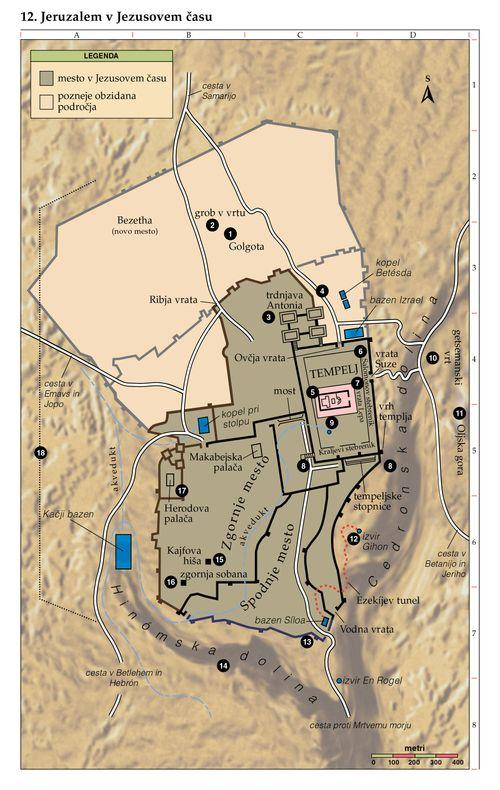
Yes — but the answer depends on what you mean by “within the Shin.”
The Shin-shaped formation is usually identified as the three main valleys of ancient Jerusalem: Hinnom on the west/southwest, Kidron on the east, and Tyropoeon/Central Valley through the middle. One topography source explicitly describes these three valleys as forming the Hebrew letter shin and says they merge south of the City of David.
Golgotha is not one of those valley lines. It is not in the Kidron, not in Hinnom, and not in the Tyropoeon/Central Valley. It is generally located northwest of the Temple/ancient city core, near the traditional Church of the Holy Sepulchre site, though the exact location is debated. Biblical Archaeology Society notes that Golgotha had to be outside the city in Jesus’ time, while also noting that the present Old City walls are not the same as the walls from Jesus’ day.
So the clean answer is:
If by “inside the Shin” you mean inside the three-pronged valley pattern itself, Golgotha is probably outside or on the northwest edge of that formation, not inside the valley-letter shape.
If by “inside the broader Jerusalem sacred-topography picture” you mean near the city marked by those valleys, then yes, Golgotha is very close to the Shin-marked city, just outside the first-century city wall.
The current scholarly consensus, stated cautiously, places Golgotha near the traditional Holy Sepulchre area, “somewhere north of the first wall” and “west of the second wall,” though exact specificity is difficult. That means it is outside the walled city of Jesus’ time, but still adjacent to the city’s northwest side.
For your picture-type study, I would frame it this way:
The Shin-shaped valleys mark the guarded city/temple-topography. Golgotha is not down inside the Shin valleys themselves; it sits just outside the city’s wall/threshold area, on the northwest side. That actually fits Hebrews 13 well: Jesus suffers “without the gate,” outside the city, while still being immediately connected to Jerusalem’s priestly/legal center.
That may be stronger than trying to force Golgotha “inside” the Shin. The pattern becomes:
Shin-marked Jerusalem / temple city → Lamb taken by priestly authorities → inspected → led outside the gate → slain outside → blood-work fulfilled in the heavenly holy place.
In Psalms 110, the last verse, I think verse 8, it talks about how the king is gonna pass by the brook and look up at the city. When Jesus was taken from the garden, did Jesus pass over the brook and then look up to the city? After Jesus was condemned to hang on the cross, did he cross the brook and look up at the city? Is there a connection in the events surrounding the death of Jesus and the capture of Jesus that would look like or could be tied to Psalm 110?
You’re thinking of Psalm 110:7, not verse 8. I’ll check the geography carefully, because the key question is whether “brook in the way” can map to the Kidron crossing without forcing the text.
Thought for 57s
You are thinking of Psalm 110:7, not verse 8:
“He shall drink of the brook in the way: therefore shall he lift up the head.” — Psalm 110:7
The verse does not directly say, “he looks up at the city.” It says he drinks from the brook “in the way,” and therefore lifts up the head. That phrase is more likely an image of victory, strengthening, restoration, and exaltation after humiliation or battle. Some commentators read the “brook” as a warrior’s refreshment on the way to victory, while others have seen Messiah’s suffering/humiliation in it, and some have specifically suggested the brook Cedron/Kidron as part of the Passion picture.
Now, to your actual mapping question: yes, there is a real possible rope here — but it should be stated as typological, not as an explicit Gospel quotation of Psalm 110:7.
John explicitly says Jesus crossed the Kidron before the arrest:
“When Jesus had spoken these words, he went forth with his disciples over the brook Cedron, where was a garden, into the which he entered, and his disciples.” — John 18:1
Gethsemane is across the Kidron Valley on the Mount of Olives, east of Jerusalem, and all four Gospels place Jesus’ prayer/arrest there. So before the arrest, the text explicitly gives us:
city / supper → across Kidron → garden → prayer/cup → arrest.
After the arrest, John says:
“Then the band and the captain and officers of the Jews took Jesus, and bound him, And led him away to Annas first…” — John 18:12–13
Since Gethsemane is across the Kidron from Jerusalem, taking Jesus from the garden back to Annas/Caiaphas/Jerusalem would naturally require crossing back over or through the Kidron area. John does not stop and say, “and they crossed the Kidron again,” so we should call that an inferred geographic return, not an explicit textual statement. But geographically, the movement back from Gethsemane to the city/priestly authorities points that direction.
So the likely movement is:
Jesus crosses the brook to the garden voluntarily. Jesus drinks the cup in prayer. Jesus is seized in the garden. Jesus is led back across the brook toward the city/priestly authorities.
That is where Psalm 110:7 becomes very interesting.
Psalm 110 is already a Messianic priest-king Psalm. Jesus Himself had already brought Psalm 110 into the argument with the religious leaders:
“The LORD said unto my Lord, Sit thou on my right hand, till I make thine enemies thy footstool.” — Psalm 110:1 / Matthew 22:44
And Psalm 110 also says:
“Thou art a priest for ever after the order of Melchizedek.” — Psalm 110:4
So when Jesus is arrested and taken to the priestly authorities, the irony is enormous:
The true Priest-King after Melchizedek is being bound and judged by the corrupt priestly system.
Then Psalm 110:7 says the victorious one drinks from the brook “in the way” and afterward lifts up His head. That can fit the Passion-to-exaltation pattern:
brook / way / humiliation / suffering / then lifted head / resurrection / exaltation / right hand of God.
The strongest Old Testament narrative echo may actually be David crossing the Kidron in 2 Samuel 15. David, the rejected king, leaves Jerusalem during Absalom’s betrayal:
“...the king also himself passed over the brook Kidron, and all the people passed over, toward the way of the wilderness.” — 2 Samuel 15:23
Then:
“And David went up by the ascent of mount Olivet, and wept as he went up…” — 2 Samuel 15:30
That is a very strong Son-of-David rope:
David, betrayed and rejected, crosses the Kidron and goes up the Mount of Olives in sorrow. Jesus, the greater Son of David, crosses the Kidron to the Mount of Olives/Gethsemane, drinks the cup, is betrayed, and is led back to suffer.
As for after Jesus was condemned to be crucified: I would not connect that part to crossing the Kidron. The normal Passion route from condemnation to Golgotha does not require crossing the Kidron; Golgotha is associated with a site outside Roman Jerusalem’s walls, traditionally northwest/west of the temple-city area, not across the eastern Kidron Valley. So the arrest-night movement is the stronger Kidron/Psalm 110 picture, not the road from Pilate to Golgotha.
Clean peg:
Psalm 110:7 does not explicitly name the Kidron or say Jesus looked up at Jerusalem. But John explicitly places Jesus crossing the Kidron into the garden before the arrest. The return from Gethsemane to the priestly authorities likely crossed back toward the city. In that movement, the rejected Son of David and true Melchizedek Priest-King passes through the brook-in-the-way pattern: He drinks the cup, submits to humiliation, is taken by sinners, and afterward lifts up His head in resurrection and exaltation.
So yes — there is a real connection worth exploring, especially when you join:
Psalm 110 priest-king → David crossing Kidron in betrayal → Jesus crossing Kidron to Gethsemane → cup language → arrest by priestly authorities → resurrection/exaltation/right hand.
Kind of straying off the topic here, but when Revelation says that Jesus will rest his feet upon the Mount of Olives and it will split, something to that nature from memory, does that produce a new character, letter, or a new two-letter statement that would change a coincidental meaning that is not explicit in the Bible, but that we could reproduce and see? What would it look like if we were to take the geographic region that has the shin and then we split the Mount of Olives as described in the Bible? Would it make a new character or a new statement coincidentally?
Thought for 31s
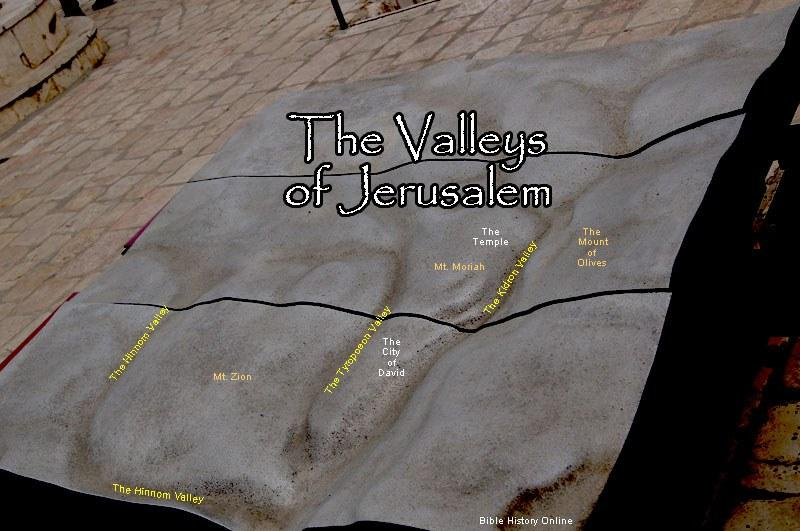
Small correction first: the Mount of Olives splitting is Zechariah 14:4, not Revelation. Revelation has related end-time/cosmic/mountain language, but the specific “feet on the Mount of Olives and it splits” text is Zechariah.
“His feet shall stand in that day upon the mount of Olives, which is before Jerusalem on the east, and the mount of Olives shall cleave in the midst thereof toward the east and toward the west…” — Zechariah 14:4
The text says the Mount of Olives is east of Jerusalem, and that it splits east-west, with half moving north and half moving south.
The existing “Shin” idea is usually based on the three valleys around ancient Jerusalem: Kidron, Tyropoeon/Central, and Hinnom. Those are the three lines said to resemble the Hebrew letter ש / Shin.
So if we overlay Zechariah 14 onto that picture, it would probably not create a new standard Hebrew letter. It would look more like this:
Current valley picture, simplified: ש Hinnom / Tyropoeon / Kidron Mount of Olives sits east of the Kidron: ש Mount of Olives |||||||||| Zechariah 14 split added: ש ============ new east-west valley through Olivet
So visually, it is probably:
Shin-marked Jerusalem + a new east-west cleft/escape-valley to the east.
I do not see a reliable Hebrew two-letter statement formed by that. If someone said, “It becomes Shin plus Vav,” or “Shin plus this other letter,” that would probably be too forced, because the new Zechariah valley runs east-west, while Hebrew letters are being recognized from a north-up map shape. Rotating or assigning a letter to the new line would be arbitrary.
But there is a strong picture-type peg:
The Shin-shaped Jerusalem topography is associated with the city/temple zone. Then Zechariah describes Yahweh’s feet standing on the Mount of Olives and creating a new valley / new way of escape. Zechariah 14:5 then says the people flee through that valley. So the biblical emphasis is not “a new letter appears,” but a new way opens.
That fits your larger “door / way / guarded access” study much better than forcing a new alphabet sign:
Eden: the way to life is guarded. Tabernacle: the way inward is guarded by cherubim and blood-access. Jesus: the new and living way is opened by His blood. Zechariah 14: when His feet stand on Olivet, the mountain itself opens a way.
So my clean answer would be:
The split Mount of Olives probably does not produce a recognizable new Hebrew character or two-letter statement. It would more likely look like the Shin-shaped Jerusalem valley formation with a new east-west breach opening from the east side. The stronger biblical meaning is not a new letter, but a new “way” — a divinely opened passage connected to the King’s return.
Can you give me a top view image of the Shin imbedded in the ravines of Jerusalem, and show me Golgotha, and show me the Temple (traditional site), and show me the Temple (Bob Cornuk, City of David, where the water comes out of the tunnel), the garden where Jesus was taken, and the brook kidron; and add the mount of olives, and a transparent line where the bible says that the mount of olives will split?
Thought for 1m 47s
Edit
Does the bible say that the mount of olives will be split from east to west?
Thought for 4s
Yes. The Bible says that in Zechariah 14:4.
KJV:
“And his feet shall stand in that day upon the mount of Olives, which is before Jerusalem on the east, and the mount of Olives shall cleave in the midst thereof toward the east and toward the west, and there shall be a very great valley; and half of the mountain shall remove toward the north, and half of it toward the south.” — Zechariah 14:4
So the split is described as:
east ↔ west cleaving direction, producing a great valley, with:
half the mountain moving north, half the mountain moving south.
So yes: the text specifically says the Mount of Olives will split toward the east and toward the west.
If the new split connects with the kidron valley (3) then would that create a new letter or two letter word? Does Golgotha create punctuation? Like an apostrophe in english, but in Hebrew?
I’d separate this into two questions: shape recognition and actual Hebrew writing rules. Shape-wise it may create a suggestive mark, but Hebrew letters/punctuation have rules that keep us from overclaiming it.
Thought for 18s
Possibly as a visual curiosity, but I would not call it a real Hebrew letter or word.
1. If the Zechariah split connects to the Kidron#
Zechariah says the Mount of Olives splits east to west, making a great valley, while half the mountain moves north and half south. The Mount of Olives is east of Jerusalem and separated from it by the Kidron Valley.
So if that new east-west split reaches the Kidron, the visual would be something like:
Existing valley-Shin idea: ש New Zechariah east-west cleft attached to the Kidron side: ש ─────
That would be Shin plus a horizontal extension, not a standard Hebrew two-letter word.
A horizontal line in Hebrew can resemble a maqaf — a Hebrew hyphen-like joining mark — but that would be punctuation, not a letter. And even that would be speculative, because Hebrew punctuation is written according to text rules, not terrain shapes.
So I would say:
The split would probably create a Shin-with-an-opened-way-to-the-east picture, not a new clear Hebrew word.
That actually fits the Bible pattern better: a new way / valley / escape path opens from the east side.
2. Does Golgotha create Hebrew punctuation?#
Not in a strict writing sense.
Modern Hebrew does have an apostrophe-like mark called geresh: ׳. It can mark abbreviations, numerals, or special pronunciation. Hebrew also has gershayim: ״, a double mark used for abbreviations and numerals.
But Golgotha’s position northwest/west of the city would not automatically become a Hebrew geresh. That would be too forced.
However, there is one visual thought that is more interesting than “apostrophe.”
The Hebrew letter shin/sin is written:
ש
With later vowel/diacritic marking, a dot can distinguish:
שׁ = shin, “sh” sound שׂ = sin, “s” sound
So if Golgotha appears visually like a “dot” above or near the Shin-shaped valley formation, someone could contemplate it like a mark above the Shin. But that is not ancient proof, and it is not a true Hebrew punctuation argument. It would be a visual coincidence / picture-type observation only.
3. Best disciplined conclusion#
I would frame it this way:
The Zechariah 14 split, if it reaches the Kidron, would not form a clean new Hebrew letter or two-letter word. It would look more like the existing Shin-shaped Jerusalem valley system being opened by a new east-west way through the Mount of Olives. Golgotha may visually function like a marked point near the Shin-shaped city, but not as Hebrew punctuation in a strict sense.
The stronger peg is not “new word,” but:
Shin-shaped Jerusalem → Lamb taken → Golgotha outside the gate → Mount of Olives split → new opened way.
That is safer and more meaningful than trying to force a readable Hebrew word from the map.
Not a horizontal line connecting to the Shin, but the Shin, and then a vertical line for the kidron valley, or a Y, or the mount of olives splits into the vertical line of the kidron valley, or the Y.
Thought for 30s
Yes — if you mean a separate upright stroke beside the Shin, then the closest Hebrew-letter analogy would be a ו (vav), not punctuation.
That is the most natural Hebrew comparison, because:
• Shin = ש
• a simple vertical line = most naturally ו (vav)
So if you are picturing:
the Shin-shaped ravines of Jerusalem, and then another upright line / stem formed by the Kidron or by the split feeding into it,
then the most plausible “letter-like” idea would be:
1. Shin + Vav#
Visually, that could look something like:
ש ו
or, depending on how you mentally group it,
שו or וש
But here is the caution:
• Hebrew reads right to left
• the terrain is not written text
• the exact orientation is not fixed
• so we should not overclaim a real readable word
Still, vav is the best match for a vertical stroke.
2. If the Olivet split feeds into the Kidron and creates a Y-shape#
If what you are seeing is not merely a straight vertical line, but a fork or Y, then that does not map cleanly to a standard Hebrew letter.
Hebrew has:
• ו = straight line / hook-like stroke
• י = small stroke / tiny hand-like mark
• ש = three-pronged letter
But a freestanding Y-shape is not a normal Hebrew character in the way you are describing it.
So if the Mount of Olives split creates a branching form into the Kidron, then I would call it:
a forked way or branched access pattern, not a stable Hebrew letter.
That actually fits your larger study better:
• Jerusalem = Shin-like formation
• Olivet split = new opened way
• Kidron = descending line / threshold line
• so the shape becomes less “new word” and more Shin with a divinely opened branch / outlet / path
3. Could Golgotha act like punctuation?#
Strictly speaking, not really.
If you mean something like an English apostrophe, the Hebrew comparison would be closest to a geresh (׳), but Golgotha does not sit in a way that naturally functions like that in a disciplined Hebrew-reading sense.
However, if you are asking visually, “does Golgotha add a small detached mark to the overall figure?” then I would say:
• not punctuation in a real Hebrew sense
• more like a small detached mark or perhaps even a yod-like point, if someone were meditating on the shape
But that would be picture language only, not lexical proof.
4. Best disciplined possibilities#
If we stay careful, the most plausible visual readings are:
Option A — Shin + Vav#
If the added feature is a straight upright line.
That gives a visual of:
ש + ו
This is the strongest “letter” possibility.
Option B — Shin with a branched eastern extension#
If the Olivet split merges with the Kidron in a Y-like way.
That is not a standard letter, but a meaningful visual:
• Shin-city
• opened eastern way
• branched valley of escape
Option C — Golgotha as a detached small mark#
Interesting visually, but too weak to call punctuation.
5. If you want the most meaningful symbolic reading#
I would say the strongest symbolic reading is not punctuation, but this:
Shin = Jerusalem / the city marked by the valley formation Vav-like line = connection / hook / joining / extension / way Olivet split into Kidron = a newly opened eastern way
That is actually richer than trying to get a strict word.
Because vav often functions in Hebrew as a connector (“and”), and visually it is a joining stroke. So even if we do not force a readable word, the picture-type idea could be:
the Shin-city with an added connecting line / opened way
That would fit your broader theme of:
• guarded way
• threshold
• opened way
• movement from outside to inside / from barrier to access
6. Bottom line#
So yes — if it is a vertical line beside the Shin, the best Hebrew analogy is vav (ו). If it becomes a Y-shaped fork, it is not a standard Hebrew letter, but it may still function as a suggestive visual of an opened branch / way. And Golgotha does not naturally work as Hebrew punctuation, though as a contemplative map-symbol it could look like a detached small mark.
If you want, I can next sketch out three possible letter-readings from your map idea:
1. Shin + Vav
2. Shin + Yod
3. Shin with no true second letter, only an opened-way branch
and show what each would mean symbolically.
In a short reply, what is the letters of YHWH?
The Hebrew letters of YHWH are:
יהוה
They are, right to left:
י — Yod ה — He ו — Vav/Waw ה — He
So in English letter form:
Yod – He – Vav – He or Y-H-W-H / Y-H-V-H
It seems like, if yoiu will allow me to be creative, and not continually warn me as I explore, it seems like the geography, can, because God can do whatever he wants, can make a statement using pictographs, and maybe we need to zoom out a little bit, and maybe the Mount of Olives split is the key. I feel like there is something there, and maybe it is connect the dots. by the way, in a short reply, could the Cross on Golgotha see the Temple, or inside the temple, back then, possibly?
Thought for 4s
Yes — possibly the Temple complex, but probably not “inside” the Temple.
Short version:
• Golgotha was outside the city wall, likely to the west or northwest of the Temple area.
• From an elevated crucifixion spot, Jesus/the cross could likely have had line-of-sight to Jerusalem and perhaps the Temple Mount / upper Temple structures.
• But seeing into the Temple courts, or inside the Temple itself, would be unlikely because of distance, walls, and intervening buildings.
So the safest answer is:
Could Golgotha see the Temple? Possibly yes. Could it see inside the Temple? Probably no, or at least not clearly.
If you want, I can next give you a map-style reasoning chain for:
1. traditional Golgotha, and
2. Garden Tomb / skull-hill area, and compare whether either would more likely see the Temple.
where is your reply
Thought for 4s
Here it is again:
Yes — possibly the Temple complex, but probably not inside the Temple itself.
If Jesus was crucified at the traditional Golgotha location, northwest/west of the Temple area, the cross may have had a line of sight toward Jerusalem and possibly the Temple Mount / upper Temple structures, depending on elevation and buildings at the time.
But seeing inside the Temple would be unlikely because the Temple courts had walls, gates, buildings, and distance between them.
So the clean answer is:
Could the cross at Golgotha see the Temple? Possibly yes. Could it see inside the Temple? Probably not clearly, if at all.
No, the new map with overlay of possible pictograph letters, and possibly zooming out a little to see if God, in his creative ability, added features, to demonstrate his design in geography. And maybe it is a connect the dots, with key locations.
Thought for 1m 23s
Edit
Can you show me the old hebrew alphabet, I will look myself and see if I can find pattern(s).
Thought for 1m 9s
Edit
what is the pictograph of Tsade, or Shin and Tsade? Or Shin and Tsade and Vav, Or Shin and Zayin, or Shin and Resh, or Shin and Resh and Vav?
Thought for 23s
Sure. If we think in pictograph-style meanings rather than strict dictionary definitions, here is a simple way to look at them:
Single letter#
Tsade / Tsadey (𐤑 / צ)#
Common pictograph ideas:
• side
• hunt / chase
• catch
• sometimes desire / pursuit
So Tsade often gives the idea of pursuing, catching, or something at the side/path.
Letter combinations#
Shin + Tsade#
שצ
• Shin = teeth / press / consume
• Tsade = hunt / catch / pursuit
Possible pictograph idea:
• to seize
• to press upon in pursuit
• to devour/catch
• consuming pursuit
Not a common standard Hebrew root by itself, but pictographically it can feel like:
teeth catching or pressing in pursuit
Shin + Tsade + Vav#
שצו
• Shin = teeth / consume / press
• Tsade = pursuit / catch / hunt
• Vav = hook / join / connect / secure
Possible pictograph idea:
• a catching that is secured
• a consuming pursuit joined/fastened
• seize and hold
So visually:
press / catch / secure
Shin + Zayin#
שז
• Shin = teeth / consume / press
• Zayin = weapon / cut / strike / tool
Possible pictograph idea:
• devour and cut
• press with a weapon
• consuming strike
This one feels like:
teeth + weapon or consuming force
Shin + Resh#
שר
This one is more interesting, because it is closer to real Hebrew usage.
• Shin = teeth / press / consume
• Resh = head / chief / first / person
Possible pictograph idea:
• head/chief
• one who rules
• the chief who presses/governs
And in real Hebrew, שר often relates to:
• prince
• ruler
• captain
So this is the strongest one in your list as an actual Hebrew-type form.
A simple pictograph feel would be:
teeth + head = chief / ruler / one in authority
Shin + Resh + Vav#
שרו
• Shin = teeth / press
• Resh = head / chief
• Vav = hook / join / establish
Possible pictograph idea:
• the ruler joined/established
• chief connected
• rule made firm
As a consonant form, שרו could be read different ways depending on vowels, so pictographically I would just read it as:
chief / ruler / established / connected
Short summary list#
• Tsade = pursuit / catch / side
• Shin + Tsade = pressing pursuit / seizing
• Shin + Tsade + Vav = seize and secure
• Shin + Zayin = consume + weapon / devouring strike
• Shin + Resh = chief / prince / ruler
• Shin + Resh + Vav = established ruler / connected chief
If you want, I can next make you a small visual chart showing these combinations in Paleo-Hebrew symbols with the possible pictograph meanings beside each one.
What about Resh, Shin, Vav? Or Vav, Resh, Shin, Vav? What if a Yod is added, does that mean anything?
Thought for 23s
Yes — now you may have landed on something much stronger than loose pictograph guessing.
Hebrew reads right to left, but using your sequence names:
Resh + Shin + Vav#
רשו
This can connect to the Hebrew verb idea of possess / inherit / take possession, from the root ירשׁ / yarash.
A Yod is part of the fuller root:
Yod + Resh + Shin#
ירשׁ
This is the major Hebrew root meaning:
to possess, inherit, dispossess, take possession.
That is a huge Bible word.
For example:
“Go in and possess the land…” — Deuteronomy 1:8
The Hebrew form there is very close to what you are asking about: וּרְשׁוּ / ureshu — “and possess.”
That is:
Vav + Resh + Shin + Vav#
ורשו
Meaning roughly:
and possess / and inherit / and take possession.
So your sequence:
Vav – Resh – Shin – Vav can actually line up with a real biblical Hebrew form connected to inheritance / possession.
That is much stronger than saying, “maybe this looks like a symbol.”
If a Yod is added#
Adding Yod gives the root more clearly:
ירשׁ / Y-R-Sh = inherit / possess / dispossess
And with Vav:
וירשו / Vav-Yod-Resh-Shin-Vav
can mean something like:
and they shall inherit / and they shall possess
depending on the form and context.
That is very interesting for your geography study because you have been working with:
city, land, inheritance, the Lamb, the opened way, the King, and possession.
So the strongest word-family here is:
ירשׁ — yarash — to inherit, possess, take possession.
That may be the best “connect-the-dots” Hebrew root to keep on the table.
What about Vav, Rwsh Shin Yod Vav?
Thought for 20s
If the letters are:
Vav – Resh – Shin – Yod – Vav Hebrew: ורשיו
That is not the clean “inherit / possess” form.
The stronger inheritance word is:
Yod – Resh – Shin ירשׁ = yarash = inherit, possess, take possession.
And with Vav added:
Vav – Yod – Resh – Shin – Vav וירשו = and they shall inherit / and they shall possess depending on context.
So the Yod position matters.
• וירשו = Vav + Yod + Resh + Shin + Vav → strong inheritance/possession reading.
• ורשיו = Vav + Resh + Shin + Yod + Vav → not the same; much weaker as a meaningful word.
For your geography-pictograph idea, if the “Yod-like mark” could visually sit before Resh-Shin-Vav, then you may have something like:
ו + ירשׁ + ו and / possess-inherit / they
That would be the stronger “take possession / inherit” peg.
Maybe the split in the mount of olives is the Yod, or maybe the Temple.
Thought for 9s
Yes — creatively, either one could function as a Yod, depending on how you’re “reading” the geography.
Most natural Yod-like options:#
• The Mount of Olives split: This works well as a small detached stroke/mark, which is very Yod-like in feel.
• The Temple: This could also work as a small central mark / seed-point / hand-like marker inside the larger city pattern.
If you are building the geography as pictograph layers:#
• Shin = the three valley/ravine pattern
• Vav = the long upright Kidron line
• Yod = either:
o the split line on Olivet, or
o the Temple as a compact marked point
My short take:#
• If you want a detached little mark, the Olivet split is the stronger Yod.
• If you want a central sacred marker inside the city pattern, the Temple is the stronger Yod.
So yes — I think your instinct is reasonable:
the split may be the Yod, or the Temple may be the Yod, depending on which “statement” you think the geography is making.
If you want, I can next help you test 3 or 4 possible readings from your marked-up map and lay them out simply:
1. Shin + Vav + Yod
2. Shin + Yod + Vav
3. Temple as Yod
4. Olivet split as Yod
What do the four possible readings mean if read as a statement or word?
Thought for 1m 5s
Yes. Staying in creative-exploration mode, the strongest possible readings from the letters you are testing are these:
1. וירשו — Vav + Yod + Resh + Shin + Vav#
וירשו = “and they shall possess / and they shall inherit.”
This is the strongest one.
Root:
ירשׁ — yarash = possess, inherit, take possession, dispossess.
So if the geography can be read as:
Vav → Yod → Resh → Shin → Vav
then the statement could be:
“And they shall inherit / possess.”
That is a very strong covenant-land / inheritance idea.
2. ורשו — Vav + Resh + Shin + Vav#
ורשו can carry the idea:
“and possess” / “and take possession”
It is still connected to the yarash / inherit-possess family, but the fuller form with the Yod is stronger:
וירשו.
3. ויש — Vav + Yod + Shin#
ויש = “and there is” / “and there exists.”
This is a real simple Hebrew phrase.
So if the map reads:
Vav → Yod → Shin
it could say:
“And there is…” “And there exists…”
That is short, but interesting if the “thing that exists” is then visually supplied by the geography.
4. ושי — Vav + Shin + Yod#
ושי can be read as:
“and a gift” / “and a present” / “and tribute.”
Because שי / shai means gift, present, tribute.
That would be interesting if the Temple or Golgotha is functioning as the “gift/offering” point.
One more tempting but incomplete reading#
If you get:
ישו — Yod + Shin + Vav
That looks like Yeshu, a shortened later Hebrew form associated with Jesus.
But the fuller biblical Hebrew/Aramaic name is:
ישוע — Yeshua
That requires an Ayin at the end:
Yod + Shin + Vav + Ayin
So ישו is interesting visually, but incomplete.
Best candidate from your study#
The best and most meaningful one is:
וירשו — “and they shall inherit / possess.”
That fits your whole rope:
city → land → King → Lamb → opened way → inheritance → possession under the rightful Heir.
Maybe there is a timeline? Vav, Resh, Shin, Vav is to Abraham Vav, Shin, Yod, is Jesus on Golgotha Vav, Yod, Resh, Shin, Vav is the Split of Olives at the return and new kingdom
Thought for 9s
Yes — that is actually a very interesting timeline reading.
If I follow your sequence as a progressive statement, it could look like this:
1. ורשו — Vav, Resh, Shin, Vav#
Possible sense:
“and possess” “and take possession”
Abraham connection:#
That fits the Abrahamic promise / land / seed / inheritance stage.
God tells Abraham and his seed about land, promise, and possession. So this can work as the beginning peg:
Promise of possession
2. ושי — Vav, Shin, Yod#
Possible sense:
“and a gift” “and tribute / present”
Jesus / Golgotha connection:#
That fits very well as a Christ peg, because Jesus is:
• the gift of God
• the offering
• the tribute / present
• the One given
So this middle stage could be:
the Gift is given
That is a very beautiful middle point in your timeline.
3. וירשו — Vav, Yod, Resh, Shin, Vav#
Possible sense:
“and they shall inherit” “and they shall possess”
Return / Olivet split / kingdom connection:#
This fits extremely well for the consummation stage:
• return of the King
• opened kingdom
• inheritance realized
• land / city / reign / possession fulfilled
So this becomes:
inheritance fulfilled
So your timeline could read:#
1. Abraham#
ורשו Promise / possess
2. Jesus at Golgotha#
ושי Gift / offering / tribute
3. Return / split of Olivet / kingdom#
וירשו They shall inherit / possess
In short form#
You may have a three-stage movement:
Promise of possession Gift given Inheritance fulfilled
That is actually a very elegant timeline.
Even more interesting: the added Yod#
The Yod may be the hinge.
Because when the Yod is added, the inheritance form becomes stronger:
• ורשו → possess / possession idea
• וירשו → they shall inherit / possess
So if your map-reading is right, the Yod insertion may function like:
the divine hand enters the story
And if that Yod is tied to:
• the Temple, or
• the split / divine intervention, or
• even Jesus Himself as the hand/work of God,
then the timeline gets even richer:
Possible theological arc:#
• Abraham = promise
• Jesus = the gift / offering / divine intervention
• Return = inheritance realized
Clean final peg#
If I were to condense your idea, I would say:
Abraham = promised possession Jesus = the gift offered Return = the inheritance possessed
That is a very strong contemplative timeline.
If you want, I can next turn this into a clean 3-column chart with:
1. letters
2. possible Hebrew sense
3. redemptive timeline meaning
Does Resh, Shin, Vav mean anything?
Thought for 14s
Yes — Resh + Shin + Vav is:
רשו
With Hebrew vowels supplied as רְשׁוּ / r’shu, it can mean:
“Possess!” “Take possession!” “Inherit!”
It is connected to the root:
ירשׁ / yarash = to possess, inherit, take possession, dispossess.
So:
רשו = command form, plural:
“possess ye / take possession”
And with a Vav in front:
ורשו / u-r’shu
“and possess” / “and take possession”
That is the form you see in passages like the land-inheritance commands.
So yes — Resh, Shin, Vav is meaningful, and it fits your Abraham/land/inheritance thought very well.
I think we are onto something. I do not want to use Vav, Shin, Vav, the first letter, next to Shin (needs to be Rash. Lets build prophecy, not explicit, but hypothetical. Shin; Resh/Shin, Resh/Shin/Yon; Vav/Resh, Shin/Vav. That sort of thing, and place verse passages from the bible, and show how sophisticated this real estate is, in a geographical as symbols meaning, and how it relates to the bible. You do not need to say according to me, you do not need to make written corrections, you do not need to be contrary; just produce it for people to be their own judges, if it is reasonable, and overlay it over images. Let's do one at a time, and keep the markers we had above (temple, David's temple, Golgotha, Mount of Olives, Garden of Gethsemane, Kidron Valley, Pool of Shaloam, etc.).
Stopped thinking
Edit
Chronologically, in the bible, I want to organize the images, and have a short write up with the passage and how it relates to the image.
Thought for 2m 54s
Edit
why did you stop?
Thought for 2m 59s
Edit
What does resh, shin mean?
Thought for 18s
Resh + Shin is:
רשׁ#
With vowels supplied as רָשׁ / rash, it means:
poor, needy, impoverished, brought low
Example idea:
“He becometh poor that dealeth with a slack hand…” — Proverbs 10:4
So רשׁ can carry the idea of someone reduced, emptied, brought low, lacking possession.
But in your geography/timeline study, it also matters that Resh + Shin sits inside the larger inheritance root:
ירשׁ / yarash#
Yod + Resh + Shin = to inherit, possess, take possession, dispossess
So:
• רשׁ / rash = poor / dispossessed / lacking
• ירשׁ / yarash = inherit / possess / take possession
That is actually interesting as a contrast:
Resh-Shin alone can suggest poverty/lack. Add Yod, and it becomes inheritance/possession.
Pictograph-style:
• Resh = head / man / chief
• Shin = teeth / press / consume
Possible picture idea:
the head/man pressed down or consumed → poor, reduced, brought low
Then with Yod added:
the hand/work added to the reduced man → possession/inheritance restored
That could fit your timeline thought very well: lack → gift/work of God → inheritance.
Now show the Resh (Kidron, with the tributary to the upper left to make the resh), then shin, then Yod over Golgotha.
Thought for 1m 40s
Edit
What is the brook, or river or ravine to the left of the Shin?
Thought for 5s
The one to the left/west of the Shin is the Hinnom Valley — Hebrew Ge Hinnom.
Short answer:
• Name: Hinnom Valley / Valley of Hinnom
• Type: mainly a ravine / valley / wadi, not usually thought of as a major permanent river
• Location: on the west / southwest side of ancient Jerusalem
• Relation to the Shin image: it is the left/western prong of the Shin-shaped geography
In the map series we made:
• Left prong = Hinnom Valley
• Middle prong = Tyropoeon Valley
• Right prong = Kidron Valley / Brook Kidron
So if you mean the blue ravine running down the far left side near Golgotha, that is Hinnom. If you want, I can next label the three prongs again in one very simple key so you can keep them straight while you study the letter patterns.
No, next to the legend, and under the Golgotha, what is that water way, opposite side of Kidron Valley?
Thought for a couple of seconds
Yes — the waterway next to the legend, below Golgotha, on the opposite side from the Kidron is the Hinnom Valley side.
So on that map:
• Right/east side = Kidron Valley / Brook Kidron
• Left/west-southwest side, under Golgotha and near the legend = Hinnom Valley (Ge Hinnom)
In other words, the blue water/ravine you are pointing to is the Hinnom ravine/wadi, shown as the western side valley, opposite the Kidron on the east.
If you want, I can next give you a very simple left-middle-right key for the whole map:
• Left = Hinnom
• Middle = Tyropoeon
• Right = Kidron
so you can keep the geography straight while you test the letter patterns.
Okay, lets now do Vav, for the opposite side of Mount of olives, then the resh, for kidron, then the shin, then the vav for Hinnom, on an image generated by you.
Thought for 1m 23s
Edit
What is resh, shin, yod? What does that mean? What does Vav, Resh, Shin, vav mean?
Thought for 22s
Resh–Shin–Yod#
Hebrew letters:
רשי
This is not the strong “inherit/possess” word by itself.
A few possible ways to think about it:
1. From רשׁ / rash רשׁ means poor, needy, dispossessed, brought low.
Adding Yod at the end can make it feel like:
my poverty / my low condition / my dispossessed state
But רשי is not the clean covenant-inheritance word. It is more like:
the poor / reduced one marked by Yod
Pictograph-style:
• Resh = head / man / chief
• Shin = teeth / press / consume
• Yod = hand / work / deed
So as a symbolic picture it could read:
the head/man pressed down, with the hand/work added
That could fit Jesus at Golgotha as the brought-low one, the suffering one, the work/deed of God, but it is more pictographic than lexical.
Vav–Resh–Shin–Vav#
Hebrew letters:
ורשו
This one is stronger.
It can be read from the root:
ירשׁ / yarash = to possess, inherit, take possession, dispossess
רשו / r’shu can mean:
Possess! Take possession! Inherit!
With Vav in front:
ורשו / u-r’shu
and possess and take possession and inherit
So this is the stronger land/inheritance/Abrahamic-promise reading.
Clean contrast#
רשי — Resh, Shin, Yod Possible picture:
the poor/brought-low one with the hand/work
ורשו — Vav, Resh, Shin, Vav Possible Hebrew sense:
and possess / and take possession / and inherit
So your two strongest theological pegs could be:
Resh–Shin–Yod: the brought-low one / the suffering work Vav–Resh–Shin–Vav: and they shall possess / inherit
That gives a pretty powerful movement:
the poor/brought-low One → the inheritance/possession opened.
You put the hinnom vav in the wrong spot, it was supposed to be over the water, not over Golgatha. And the vav that is to the back side of the mount of olives needs to be a little more to the right, to leave room for the next image, the vav, yod (when the mount splits), resh, shin, vav.
Thought for 1m 20s
Edit
The corrected vav, resh, shin, vav looks better, now lets put together the vav, yod (split from Zachariah), resh, shin, vav. Lets render that image.
Thought for 1m 18s
Edit
Now, lets put together the studies that go with each image. Image one is Shin, which is teeth, press, whatever, and is also the summarized name of Shaddai, for El Shaddai, God Almighty, and the passages you already cited for Shaddai. Then, lets look at Resh/Shin, to show the condition of people, and the passages that talk about our condition in relation to the definiton you gave for Resh Shin. Then lets look at Resh/Shin/Yod, and show that Jesus was the debased one that was lowered down, and treated as a criminal. Then lets look at the Vav/resh/shin/vav, about the possession promised to Abraham, and that Abraham did not receive it, and in Hebrews he was looking forward, and we still look forward to that same promise. Then, lets look at the Vav/Yod/Resh/Shin/Vav, as the inheritance after the mount of olives and the fulfillment of scripture; and how it all fits as a biblical narrative arch that shows beginning to end through geography by the creator of the world. I want all of this to have lots of complete verses or passages, and if we need more than one chat, lets break it up with section and subsection, and we will proceed with additional chats to make sure we capture it all.
Thought for 47s
Yes. Let’s build it as a five-study sequence, one image at a time, with each study having:
Image reading → Hebrew/pictograph idea → Scripture passages → how it fits the biblical arc.
I’ll start here with the master structure and then complete Study 1 — Shin / Shaddai in fuller form.
Master Geography-Prophecy Sequence#
Image 1 — Shin / ש#
Theme: God Almighty / El Shaddai / covenant power / guarded approach Pictograph idea: teeth, press, consume Study idea: Jerusalem’s ravines form a Shin-like geography. Shin becomes a visual opening marker for Shaddai, the Almighty God of covenant promise.
Image 2 — Resh + Shin / רש#
Theme: the human condition — poor, needy, dispossessed, brought low Study idea: mankind outside Eden is reduced, lacking, unable to possess life by natural right.
Image 3 — Resh + Shin + Yod / רשי#
Theme: the brought-low one with the hand/work/deed Study idea: Jesus is the humbled one, treated as a criminal, yet His suffering is the work of God.
Image 4 — Vav + Resh + Shin + Vav / ורשו#
Theme: “and possess / and take possession” Study idea: the promise to Abraham: land, seed, inheritance, possession — yet Abraham did not receive the fullness in his lifetime.
Image 5 — Vav + Yod + Resh + Shin + Vav / וירשו#
Theme: “and they shall inherit / and they shall possess” Study idea: the final inheritance after divine intervention, the opened way, the return of the King, and the fulfillment of God’s promise.
Study 1 — Shin / ש#
El Shaddai, God Almighty, and the Geography of the Guarded Way#
The first image begins with the Shin shape embedded in Jerusalem’s valley system. The three visible ravines — Hinnom, Tyropoeon, and Kidron — create the visual form of ש / Shin. In pictograph study, Shin carries the ideas of teeth, pressing, consuming, crushing, and devouring. But Shin also becomes associated with Shaddai, because Shaddai / שדי begins with Shin.
So the opening image carries two layers at once:
Shin as pressure / consuming / guarded edge, and Shin as the sign of Shaddai — God Almighty.
That matters because the Bible first introduces the problem as a problem of access.
Genesis 3:24 — the guarded way#
“So he drove out the man; and he placed at the east of the garden of Eden Cherubims, and a flaming sword which turned every way, to keep the way of the tree of life.” — Genesis 3:24
This is the first great geography of separation.
Man is outside. The way is guarded. The tree of life is no longer accessible by natural approach. The sword turns every way. The entrance is protected by heavenly guardians.
That is why the map begins well with a Shin-shaped guarded geography. The image is not merely decorative. It becomes a study of approach, boundary, and barred access.
The city is surrounded by ravines. The Temple sits within guarded sacred geography. The Kidron is on the east. The Hinnom marks the west/southwest. The Tyropoeon cuts through the city. The whole setting becomes a visible geography of separation and approach.
El Shaddai appears to Abraham#
The first major appearance of El Shaddai / God Almighty is in Genesis 17, at the moment when Abraham has no natural power to bring the promise to pass.
“And when Abram was ninety years old and nine, the LORD appeared to Abram, and said unto him, I am the Almighty God; walk before me, and be thou perfect. And I will make my covenant between me and thee, and will multiply thee exceedingly. And Abram fell on his face: and God talked with him, saying, As for me, behold, my covenant is with thee, and thou shalt be a father of many nations. Neither shall thy name any more be called Abram, but thy name shall be Abraham; for a father of many nations have I made thee. And I will make thee exceeding fruitful, and I will make nations of thee, and kings shall come out of thee. And I will establish my covenant between me and thee and thy seed after thee in their generations for an everlasting covenant, to be a God unto thee, and to thy seed after thee. And I will give unto thee, and to thy seed after thee, the land wherein thou art a stranger, all the land of Canaan, for an everlasting possession; and I will be their God.” — Genesis 17:1–8
This is important for the image sequence.
El Shaddai is not introduced as an abstract title. He is revealed in connection with:
covenant, seed, fruitfulness, nations, kings, land, and everlasting possession.
That means the first image’s Shin / Shaddai layer is not disconnected from the later inherit / possess readings. The Almighty God is the One who begins the promise that later becomes possession.
Isaac passes the Shaddai blessing to Jacob#
“And God Almighty bless thee, and make thee fruitful, and multiply thee, that thou mayest be a multitude of people; And give thee the blessing of Abraham, to thee, and to thy seed with thee; that thou mayest inherit the land wherein thou art a stranger, which God gave unto Abraham.” — Genesis 28:3–4
Again, God Almighty is tied to inheritance.
The blessing is not vague. It is the blessing of Abraham. It includes fruitfulness, multiplication, seed, and land.
So the Shin image can be read as the first visual peg of the whole study:
The Almighty God marks the place where promise, access, sacrifice, priesthood, kingship, suffering, and inheritance will converge.
God repeats it to Jacob#
“And God said unto him, I am God Almighty: be fruitful and multiply; a nation and a company of nations shall be of thee, and kings shall come out of thy loins; And the land which I gave Abraham and Isaac, to thee I will give it, and to thy seed after thee will I give the land.” — Genesis 35:11–12
Again, the Shaddai pattern is consistent:
God Almighty → fruitfulness → nations → kings → land → seed.
This is why the geography matters. Jerusalem is not just a city on a map. It becomes the stage where the covenant promises, the King, the Lamb, the Priest, the rejected one, the suffering outside the gate, and the future inheritance all meet.
Jacob remembers El Shaddai#
“And Jacob said unto Joseph, God Almighty appeared unto me at Luz in the land of Canaan, and blessed me, And said unto me, Behold, I will make thee fruitful, and multiply thee, and I will make of thee a multitude of people; and will give this land to thy seed after thee for an everlasting possession.” — Genesis 48:3–4
This is the same covenant rope again.
God Almighty is the God who gives the land as everlasting possession.
So when later we explore ורשו / and possess and וירשו / and they shall inherit, we are not starting a new subject. We are following the Shaddai promise forward.
Exodus confirms that El Shaddai is Yahweh#
“And God spake unto Moses, and said unto him, I am the LORD: And I appeared unto Abraham, unto Isaac, and unto Jacob, by the name of God Almighty, but by my name JEHOVAH was I not known to them. And I have also established my covenant with them, to give them the land of Canaan, the land of their pilgrimage, wherein they were strangers. And I have also heard the groaning of the children of Israel, whom the Egyptians keep in bondage; and I have remembered my covenant. Wherefore say unto the children of Israel, I am the LORD, and I will bring you out from under the burdens of the Egyptians, and I will rid you out of their bondage, and I will redeem you with a stretched out arm, and with great judgments: And I will take you to me for a people, and I will be to you a God: and ye shall know that I am the LORD your God, which bringeth you out from under the burdens of the Egyptians. And I will bring you in unto the land, concerning the which I did swear to give it to Abraham, to Isaac, and to Jacob; and I will give it you for an heritage: I am the LORD.” — Exodus 6:2–8
This passage ties the whole thing together.
El Shaddai is not separate from Yahweh. God Almighty is Yahweh. The promise to Abraham, Isaac, and Jacob is remembered. The land is inheritance. The people are redeemed. The promise moves toward possession.
So the Shin image can carry this first study theme:
The geography is marked by a Shin-like form, and Shin points us toward Shaddai, God Almighty — the covenant God who begins the promise, guards access, remembers His covenant, redeems His people, and moves history toward inheritance.
How Study 1 relates to the image#
The image shows Jerusalem framed by a Shin-like valley system.
That visual form becomes the opening peg:
God Almighty begins the covenant promise. The way to life is guarded. The city is surrounded by ravines and thresholds. The Temple geography will later display priestly approach. The Kidron will become the crossed boundary before Jesus’ arrest. Golgotha will stand outside the gate. The Mount of Olives will later become the place of prophetic opening.
So Study 1 is the foundation:
Shin / Shaddai / God Almighty / guarded way / covenant promise.
The next image moves from God’s Almighty promise to the condition of mankind:
Resh + Shin / רש — the poor, needy, reduced, dispossessed condition of man outside the life of God.
proceed to the next section
Thought for 26s
Study 2 — Resh/Shin#
רשׁ — The Poor, Needy, Brought-Low Condition of Man#
The second image moves from Shin / Shaddai / God Almighty to Resh + Shin / רשׁ.
In the geography overlay, Resh is seen in the Kidron-side form, and Shin is seen in the three-ravine formation of Jerusalem. Put together, the letters form:
רשׁ / rash#
This Hebrew idea carries the sense of being:
poor, needy, reduced, dispossessed, lacking, brought low.
Pictograph-style:
Resh / ר = head, man, chief, first Shin / ש = teeth, press, consume
So the picture idea becomes:
the head/man pressed down, consumed, reduced, brought low.
That is a strong image of mankind after Eden: outside the guarded way, separated from life, unable to regain possession by natural strength.
1. Man is driven out from the place of life#
The human condition begins with lost access.
“Therefore the LORD God sent him forth from the garden of Eden, to till the ground from whence he was taken. So he drove out the man; and he placed at the east of the garden of Eden Cherubims, and a flaming sword which turned every way, to keep the way of the tree of life.” — Genesis 3:23–24
This is the first “dispossessed” picture.
Man had a place. Man had access. Man had life before him. But after sin, man is driven out. The way is guarded.
So Resh/Shin begins as a picture of man reduced from his intended state: no longer walking freely in the garden, no longer possessing the way to the tree of life.
2. Sin crouches at the door#
The next major doorway picture is Cain.
“And the LORD said unto Cain, Why art thou wroth? and why is thy countenance fallen? If thou doest well, shalt thou not be accepted? and if thou doest not well, sin lieth at the door. And unto thee shall be his desire, and thou shalt rule over him.” — Genesis 4:6–7
This is Resh/Shin in living motion.
The man is at the threshold. The offering question is before him. Acceptance is possible, but sin is crouching at the door. The desire/mastery problem is now active.
This is not merely geography. It is condition.
Man outside Eden now faces the inward pressure of sin, desire, and death. The head/man is being pressed. If desire conceives sin, sin brings death.
James later explains that inner sequence:
“But every man is tempted, when he is drawn away of his own lust, and enticed. Then when lust hath conceived, it bringeth forth sin: and sin, when it is finished, bringeth forth death.” — James 1:14–15
So the Resh/Shin condition is not only poverty of material things. It is the lowered condition of man under the pressure of sin and death.
3. The word itself: poor, needy, reduced#
Proverbs uses this poverty language plainly:
“He becometh poor that dealeth with a slack hand: but the hand of the diligent maketh rich.” — Proverbs 10:4
And again:
“The ransom of a man’s life are his riches: but the poor heareth not rebuke.” — Proverbs 13:8
And:
“The poor is hated even of his own neighbour: but the rich hath many friends.” — Proverbs 14:20
These show the social and personal condition of the rash idea: the poor man is reduced, vulnerable, lacking power, lacking standing, and easily despised.
But Scripture takes that category deeper than money. It becomes the condition of the man who has no strength in himself.
David says:
“But I am poor and needy; yet the Lord thinketh upon me: thou art my help and my deliverer; make no tarrying, O my God.” — Psalm 40:17
Again:
“But I am poor and needy: make haste unto me, O God: thou art my help and my deliverer; O LORD, make no tarrying.” — Psalm 70:5
And:
“Bow down thine ear, O LORD, hear me: for I am poor and needy.” — Psalm 86:1
This is the right posture of man before God:
I lack. I cannot deliver myself. I need God to hear. I need God to help. I need God to redeem.
That is the Resh/Shin condition.
4. The whole world is in this reduced condition#
Psalm 14 gives the broad condition of mankind:
“The LORD looked down from heaven upon the children of men, to see if there were any that did understand, and seek God. They are all gone aside, they are all together become filthy: there is none that doeth good, no, not one.” — Psalm 14:2–3
Psalm 53 repeats the same witness:
“God looked down from heaven upon the children of men, to see if there were any that did understand, that did seek God. Every one of them is gone back: they are altogether become filthy; there is none that doeth good, no, not one.” — Psalm 53:2–3
Paul later gathers those texts into the legal case in Romans 3:
“As it is written, There is none righteous, no, not one: There is none that understandeth, there is none that seeketh after God. They are all gone out of the way, they are together become unprofitable; there is none that doeth good, no, not one. Their throat is an open sepulchre; with their tongues they have used deceit; the poison of asps is under their lips: Whose mouth is full of cursing and bitterness: Their feet are swift to shed blood: Destruction and misery are in their ways: And the way of peace have they not known: There is no fear of God before their eyes.” — Romans 3:10–18
That phrase is important:
“They are all gone out of the way.”
Genesis had a guarded way. Man is driven out from the way of life. Romans says mankind has gone out of the way.
So the geography study’s “way” language is not random. It is one long rope.
5. Separation from God creates the true poverty#
Isaiah says:
“Behold, the LORD’S hand is not shortened, that it cannot save; neither his ear heavy, that it cannot hear: But your iniquities have separated between you and your God, and your sins have hid his face from you, that he will not hear. For your hands are defiled with blood, and your fingers with iniquity; your lips have spoken lies, your tongue hath muttered perverseness.” — Isaiah 59:1–3
This is not merely poverty of possessions. This is poverty of access.
God’s hand is not weak. God’s ear is not dull. The problem is separation.
Man is not poor because God lacks power. Man is poor because sin separates, dispossesses, and reduces him.
That matches the Resh/Shin picture:
the man/head pressed, consumed, lowered, lacking access.
6. Even righteousness apart from God cannot restore the lost condition#
Isaiah says:
“But we are all as an unclean thing, and all our righteousnesses are as filthy rags; and we all do fade as a leaf; and our iniquities, like the wind, have taken us away. And there is none that calleth upon thy name, that stirreth up himself to take hold of thee: for thou hast hid thy face from us, and hast consumed us, because of our iniquities.” — Isaiah 64:6–7
This is one of the strongest Resh/Shin passages.
We fade. We are taken away. We cannot restore ourselves by our own righteousness. We need God’s intervention.
The man is not strong enough to re-enter Eden. He cannot overpower the cherubim. He cannot walk past the flaming sword. He cannot seize the tree of life.
He must be helped, covered, redeemed, and brought near by God’s appointed way.
7. The New Testament describes the same condition#
Paul says:
“Wherefore remember, that ye being in time past Gentiles in the flesh, who are called Uncircumcision by that which is called the Circumcision in the flesh made by hands; That at that time ye were without Christ, being aliens from the commonwealth of Israel, and strangers from the covenants of promise, having no hope, and without God in the world: But now in Christ Jesus ye who sometimes were far off are made nigh by the blood of Christ.” — Ephesians 2:11–13
This is Resh/Shin in covenant language:
without Christ, aliens, strangers, no hope, without God, far off.
That is the poor/dispossessed condition.
Then the answer is given:
“But now in Christ Jesus ye who sometimes were far off are made nigh by the blood of Christ.”
So the poor/dispossessed condition is not the end of the story. It becomes the condition into which Christ comes.
8. Revelation exposes false self-sufficiency#
Jesus rebukes Laodicea:
“Because thou sayest, I am rich, and increased with goods, and have need of nothing; and knowest not that thou art wretched, and miserable, and poor, and blind, and naked: I counsel thee to buy of me gold tried in the fire, that thou mayest be rich; and white raiment, that thou mayest be clothed, and that the shame of thy nakedness do not appear; and anoint thine eyes with eyesalve, that thou mayest see.” — Revelation 3:17–18
This is exactly the spiritual danger.
Man thinks he possesses. Man thinks he is rich. Man thinks he has need of nothing. But Jesus says the true condition is:
wretched, miserable, poor, blind, naked.
That reaches back to Eden:
Adam and Eve knew they were naked. God provided covering. The way to life was guarded.
Revelation exposes the same thing at the end: man’s true poverty is not solved by self-confidence. It is solved by Christ’s provision — gold, white raiment, opened eyes.
How Resh/Shin relates to the image#
In the image, Resh is taken from the Kidron-side form and Shin from the central valley formation. Together they give the study-word:
רשׁ / rash — poor, needy, reduced, dispossessed#
The image is showing geography as a visual study of the human condition:
outside the garden, outside the way, separated by sin, unable to possess life by natural right, needing covering, sacrifice, priesthood, blood, and the work of God.
The valleys are not just landforms in this study. They become a visual language of separation, pressure, and approach.
The first study showed:
Shin / Shaddai — God Almighty begins covenant promise and guards the way.
The second study shows:
Resh/Shin — man is poor, needy, reduced, and dispossessed outside that way.
That prepares the next movement:
Resh/Shin/Yod#
The poor/reduced condition receives the Yod — the hand, work, deed.
That points forward to Jesus, the One who becomes the brought-low servant, treated as a criminal, bearing the condition of the poor and dispossessed, so that the way back to inheritance can be opened.
proceed to the next section
Thought for 21s
Study 3 — Resh/Shin/Yod#
רשׁי — The Brought-Low One and the Work of God#
The third image adds Yod to Resh/Shin.
The prior study looked at:
רשׁ / Resh-Shin#
The poor, needy, reduced, dispossessed condition of man.
Now the image adds:
י / Yod#
The hand, work, deed, action, or divine intervention.
So the visual study becomes:
רשׁי / Resh-Shin-Yod#
As a picture-type reading:
Resh = head / man / chief Shin = teeth / press / consume Yod = hand / work / deed
The picture becomes:
the man/head pressed down, brought low, with the hand/work/deed added.
In the image, this fits beautifully when the Yod is placed over Golgotha, because Golgotha becomes the place where Jesus is brought low, treated as a criminal, pressed under the violence of sinners, and yet the whole event is also the work of God.
Jesus is not brought low because He is personally wicked. He is the spotless one. But He stands in the place of the poor, the guilty, the dispossessed, and the condemned, so that the work of God can open the way back to inheritance.
1. The Messiah is the brought-low Servant#
Isaiah 53 is the major passage.
“Who hath believed our report? and to whom is the arm of the LORD revealed? For he shall grow up before him as a tender plant, and as a root out of a dry ground: he hath no form nor comeliness; and when we shall see him, there is no beauty that we should desire him. He is despised and rejected of men; a man of sorrows, and acquainted with grief: and we hid as it were our faces from him; he was despised, and we esteemed him not. Surely he hath borne our griefs, and carried our sorrows: yet we did esteem him stricken, smitten of God, and afflicted. But he was wounded for our transgressions, he was bruised for our iniquities: the chastisement of our peace was upon him; and with his stripes we are healed. All we like sheep have gone astray; we have turned every one to his own way; and the LORD hath laid on him the iniquity of us all.” — Isaiah 53:1–6
This is exactly the Resh/Shin/Yod picture.
The Servant is despised. He is rejected. He is made low in the eyes of men. He is stricken and afflicted. But this is not meaningless humiliation. It is the work of God: “the LORD hath laid on him the iniquity of us all.”
The passage continues:
“He was oppressed, and he was afflicted, yet he opened not his mouth: he is brought as a lamb to the slaughter, and as a sheep before her shearers is dumb, so he openeth not his mouth. He was taken from prison and from judgment: and who shall declare his generation? for he was cut off out of the land of the living: for the transgression of my people was he stricken. And he made his grave with the wicked, and with the rich in his death; because he had done no violence, neither was any deceit in his mouth. Yet it pleased the LORD to bruise him; he hath put him to grief: when thou shalt make his soul an offering for sin, he shall see his seed, he shall prolong his days, and the pleasure of the LORD shall prosper in his hand.” — Isaiah 53:7–10
The phrase “in his hand” is powerful for the Yod layer.
Yod is the hand/work/deed. Isaiah says:
“the pleasure of the LORD shall prosper in his hand.”
So the brought-low Servant is not defeated by accident. The work of God prospers in His hand.
2. The righteous sufferer is surrounded, mocked, and pierced#
Psalm 22 gives another major witness.
“My God, my God, why hast thou forsaken me? why art thou so far from helping me, and from the words of my roaring? O my God, I cry in the daytime, but thou hearest not; and in the night season, and am not silent. But thou art holy, O thou that inhabitest the praises of Israel. Our fathers trusted in thee: they trusted, and thou didst deliver them. They cried unto thee, and were delivered: they trusted in thee, and were not confounded. But I am a worm, and no man; a reproach of men, and despised of the people. All they that see me laugh me to scorn: they shoot out the lip, they shake the head, saying, He trusted on the LORD that he would deliver him: let him deliver him, seeing he delighted in him.” — Psalm 22:1–8
That is the brought-low one.
He is despised. He is mocked. His trust in God is turned into public reproach.
The Psalm continues:
“Many bulls have compassed me: strong bulls of Bashan have beset me round. They gaped upon me with their mouths, as a ravening and a roaring lion. I am poured out like water, and all my bones are out of joint: my heart is like wax; it is melted in the midst of my bowels. My strength is dried up like a potsherd; and my tongue cleaveth to my jaws; and thou hast brought me into the dust of death. For dogs have compassed me: the assembly of the wicked have inclosed me: they pierced my hands and my feet. I may tell all my bones: they look and stare upon me. They part my garments among them, and cast lots upon my vesture.” — Psalm 22:12–18
The image’s Yod over Golgotha fits here because the suffering centers on the hands and feet:
“they pierced my hands and my feet.”
Yod as hand/work/deed becomes visually loaded at Golgotha. The hands of sinners pierce Him, but the work of God is being accomplished through the suffering of the righteous one.
3. He is poor, needy, and reproached#
Psalm 69 gives the same pattern of righteous suffering, shame, and reproach.
“Save me, O God; for the waters are come in unto my soul. I sink in deep mire, where there is no standing: I am come into deep waters, where the floods overflow me. I am weary of my crying: my throat is dried: mine eyes fail while I wait for my God. They that hate me without a cause are more than the hairs of mine head: they that would destroy me, being mine enemies wrongfully, are mighty: then I restored that which I took not away.” — Psalm 69:1–4
And later:
“Because for thy sake I have borne reproach; shame hath covered my face. I am become a stranger unto my brethren, and an alien unto my mother’s children. For the zeal of thine house hath eaten me up; and the reproaches of them that reproached thee are fallen upon me.” — Psalm 69:7–9
Then:
“Reproach hath broken my heart; and I am full of heaviness: and I looked for some to take pity, but there was none; and for comforters, but I found none. They gave me also gall for my meat; and in my thirst they gave me vinegar to drink.” — Psalm 69:20–21
This connects directly to the Passion.
Jesus is hated without cause. He bears reproach. He is abandoned. He thirsts. He is given vinegar.
The brought-low one is not merely physically lowered. He is socially, legally, publicly, and covenantally shamed in the eyes of the people.
4. Jesus willingly enters the arrest scene#
John’s Gospel shows that Jesus is not overpowered. He steps forward.
“When Jesus had spoken these words, he went forth with his disciples over the brook Cedron, where was a garden, into the which he entered, and his disciples. And Judas also, which betrayed him, knew the place: for Jesus ofttimes resorted thither with his disciples. Judas then, having received a band of men and officers from the chief priests and Pharisees, cometh thither with lanterns and torches and weapons. Jesus therefore, knowing all things that should come upon him, went forth, and said unto them, Whom seek ye? They answered him, Jesus of Nazareth. Jesus saith unto them, I am he. And Judas also, which betrayed him, stood with them. As soon then as he had said unto them, I am he, they went backward, and fell to the ground. Then asked he them again, Whom seek ye? And they said, Jesus of Nazareth. Jesus answered, I have told you that I am he: if therefore ye seek me, let these go their way: That the saying might be fulfilled, which he spake, Of them which thou gavest me have I lost none.” — John 18:1–9
This is a major map passage.
Jesus crosses the Kidron. He enters the garden. The hostile company comes with weapons. Jesus steps forward. He identifies Himself. He protects His disciples.
This fits the lamb picture: the true Lamb is taken, but He is not taken unwillingly. He gives Himself.
Then John says:
“Then the band and the captain and officers of the Jews took Jesus, and bound him, And led him away to Annas first; for he was father in law to Caiaphas, which was the high priest that same year.” — John 18:12–13
The true Priest-King is bound and led to priestly authorities.
That is Resh/Shin/Yod again:
the head/man is pressed down, bound, brought low — yet this is the hand/work of God moving toward sacrifice.
5. Jesus is treated as a criminal#
In Matthew, Jesus names the injustice of the arrest:
“In that same hour said Jesus to the multitudes, Are ye come out as against a thief with swords and staves for to take me? I sat daily with you teaching in the temple, and ye laid no hold on me. But all this was done, that the scriptures of the prophets might be fulfilled. Then all the disciples forsook him, and fled.” — Matthew 26:55–56
This is the criminal-treatment layer.
They come as though He were violent. They bring swords and staves. They arrest Him like a thief or rebel. Yet Jesus says this fulfills the Scriptures.
Luke makes the Isaiah 53 connection explicit:
“For I say unto you, that this that is written must yet be accomplished in me, And he was reckoned among the transgressors: for the things concerning me have an end.” — Luke 22:37
Isaiah had said:
“Therefore will I divide him a portion with the great, and he shall divide the spoil with the strong; because he hath poured out his soul unto death: and he was numbered with the transgressors; and he bare the sin of many, and made intercession for the transgressors.” — Isaiah 53:12
So Jesus is not merely treated badly. He is reckoned among transgressors.
He is placed in the category of criminals, though He is without sin.
6. The rulers mock and lower Him#
Matthew records the humiliation:
“Then the soldiers of the governor took Jesus into the common hall, and gathered unto him the whole band of soldiers. And they stripped him, and put on him a scarlet robe. And when they had platted a crown of thorns, they put it upon his head, and a reed in his right hand: and they bowed the knee before him, and mocked him, saying, Hail, King of the Jews! And they spit upon him, and took the reed, and smote him on the head. And after that they had mocked him, they took the robe off from him, and put his own raiment on him, and led him away to crucify him.” — Matthew 27:27–31
This is astonishing for the Resh layer.
Resh is head/chief/ruler. Jesus is the true King, the true Head, the rightful ruler. But here His kingship is mocked.
They put a crown on His head — but it is thorns. They put a reed in His hand — but it is mock authority. They bow — but in scorn. They strike Him on the head.
So Resh/Shin/Yod becomes visible:
the Head/King is pressed, consumed, mocked, struck, and His hand is mocked with a reed.
Yet the very mockery is unknowingly testifying: He truly is King.
7. Pilate declares no fault, yet delivers Him to death#
John’s Gospel repeats the innocence testimony.
“Pilate then went out unto them, and said, What accusation bring ye against this man? They answered and said unto him, If he were not a malefactor, we would not have delivered him up unto thee. Then said Pilate unto them, Take ye him, and judge him according to your law. The Jews therefore said unto him, It is not lawful for us to put any man to death: That the saying of Jesus might be fulfilled, which he spake, signifying what death he should die.” — John 18:29–32
Then:
“Pilate saith unto him, What is truth? And when he had said this, he went out again unto the Jews, and saith unto them, I find in him no fault at all.” — John 18:38
Again:
“Pilate therefore went forth again, and saith unto them, Behold, I bring him forth to you, that ye may know that I find no fault in him. Then came Jesus forth, wearing the crown of thorns, and the purple robe. And Pilate saith unto them, Behold the man! When the chief priests therefore and officers saw him, they cried out, saying, Crucify him, crucify him. Pilate saith unto them, Take ye him, and crucify him: for I find no fault in him.” — John 19:4–6
This is essential.
Jesus is brought low, but not because He is guilty. He is condemned, but the legal witness keeps saying He is without fault.
The spotless one is treated as the guilty one.
8. Jesus becomes poor for our sake#
Paul gives the theological meaning:
“For ye know the grace of our Lord Jesus Christ, that, though he was rich, yet for your sakes he became poor, that ye through his poverty might be rich.” — 2 Corinthians 8:9
This is one of the most direct passages for the Resh/Shin condition being taken up by Jesus.
He was rich. He became poor. Through His poverty, others are made rich.
In the study sequence:
Resh/Shin = poor, needy, dispossessed man Resh/Shin/Yod = Jesus entering that poverty through the work/deed of God
He does not become morally corrupt. He becomes poor in humiliation, suffering, and substitution. He stands where the poor and dispossessed stand, so that they may become rich in Him.
9. He humbled Himself unto death#
Philippians 2 gives the great descent-and-exaltation pattern:
“Let this mind be in you, which was also in Christ Jesus: Who, being in the form of God, thought it not robbery to be equal with God: But made himself of no reputation, and took upon him the form of a servant, and was made in the likeness of men: And being found in fashion as a man, he humbled himself, and became obedient unto death, even the death of the cross. Wherefore God also hath highly exalted him, and given him a name which is above every name: That at the name of Jesus every knee should bow, of things in heaven, and things in earth, and things under the earth; And that every tongue should confess that Jesus Christ is Lord, to the glory of God the Father.” — Philippians 2:5–11
This passage gives the whole arc.
Jesus descends. Jesus takes servant form. Jesus humbles Himself. Jesus obeys unto death. Then God highly exalts Him.
So the brought-low image is not the final state. It is the path to exaltation.
The Head is pressed down, but the Head will be lifted up.
10. The cross is the predetermined work of God#
Acts shows that the suffering of Jesus was not accidental.
Peter says:
“Ye men of Israel, hear these words; Jesus of Nazareth, a man approved of God among you by miracles and wonders and signs, which God did by him in the midst of you, as ye yourselves also know: Him, being delivered by the determinate counsel and foreknowledge of God, ye have taken, and by wicked hands have crucified and slain: Whom God hath raised up, having loosed the pains of death: because it was not possible that he should be holden of it.” — Acts 2:22–24
That is exactly the Yod layer.
Wicked hands crucified Him. But the event was also by God’s determinate counsel. God raised Him up.
The early believers say the same thing in prayer:
“For of a truth against thy holy child Jesus, whom thou hast anointed, both Herod, and Pontius Pilate, with the Gentiles, and the people of Israel, were gathered together, For to do whatsoever thy hand and thy counsel determined before to be done.” — Acts 4:27–28
Notice the phrase:
“thy hand and thy counsel.”
The Yod layer is again powerful:
the hand/work/deed of God is present even through the wicked actions of men.
The rulers intend evil. God is accomplishing redemption.
11. The work is finished at Golgotha#
John records the completion:
“After this, Jesus knowing that all things were now accomplished, that the scripture might be fulfilled, saith, I thirst. Now there was set a vessel full of vinegar: and they filled a spunge with vinegar, and put it upon hyssop, and put it to his mouth. When Jesus therefore had received the vinegar, he said, It is finished: and he bowed his head, and gave up the ghost.” — John 19:28–30
This is the Yod as completed work.
The suffering is not chaotic. The Scriptures are fulfilled. Jesus knows all things are accomplished. He says, “It is finished.”
The work/deed is complete.
12. The suffering outside the gate sanctifies the people#
Hebrews ties Golgotha to geography:
“For the bodies of those beasts, whose blood is brought into the sanctuary by the high priest for sin, are burned without the camp. Wherefore Jesus also, that he might sanctify the people with his own blood, suffered without the gate. Let us go forth therefore unto him without the camp, bearing his reproach. For here have we no continuing city, but we seek one to come.” — Hebrews 13:11–14
This passage belongs directly with the map.
Golgotha is outside. Jesus suffers without the gate. His blood sanctifies the people. His reproach becomes the place where we go forth unto Him. And the passage ends with inheritance-looking language:
“we seek one to come.”
So Golgotha is not merely a death site. It is the outside-the-gate place where the poor, dispossessed people are sanctified by the blood of the brought-low one.
How Resh/Shin/Yod relates to the image#
The image places Yod over Golgotha.
That makes the picture read:
Resh/Shin/Yod#
the poor/brought-low condition + the hand/work/deed
In Jesus, this becomes:
the humbled One, the despised One, the rejected One, the One treated as a criminal, the One pierced in hands and feet, the One brought outside the gate, the One through whom God’s work is finished.
This study moves the biblical arc forward:
Study 1 — Shin / Shaddai: God Almighty begins the promise and guards the way.
Study 2 — Resh/Shin: Man is poor, needy, reduced, and dispossessed outside the way.
Study 3 — Resh/Shin/Yod: Jesus enters that brought-low condition, not as a sinner in Himself, but as the spotless substitute. The hand/work of God is accomplished through His suffering.
The next study turns from the brought-low work of Christ to the inheritance promise:
Vav/Resh/Shin/Vav — ורשו#
and possess / and take possession / and inherit
That moves us back to Abraham, the land, the promise, the inheritance not yet fully received, and the forward-looking hope of Hebrews.
Proceed to the next section
Thought for 20s
Study 4 — Vav/Resh/Shin/Vav#
ורשו — “And Possess / And Take Possession”#
The fourth image expands the reading from the condition of man and the work of Christ into the covenant promise of possession.
The letters are:
ו ר ש ו#
Vav — Resh — Shin — Vav
Read as a Hebrew form:
ורשו / u-r’shu#
Meaning:
and possess and take possession and inherit
This comes from the inheritance/possession root:
ירשׁ / yarash#
to possess, inherit, take possession, dispossess
So the image now becomes more than a study of suffering. It becomes a study of promised possession.
The two Vavs frame the word like connection points:
Vav = hook, join, connection Resh/Shin = the poor/reduced/dispossessed condition, but also the core of the possess/inherit word-family when brought into the covenant form Vav = connection, joining, continuation
So the visual phrase can be read as:
The dispossessed condition is being joined to the promise of possession.
That is Abraham’s story.
1. Abraham is called out toward a promised land#
The promise begins with God calling Abram out.
“Now the LORD had said unto Abram, Get thee out of thy country, and from thy kindred, and from thy father’s house, unto a land that I will shew thee: And I will make of thee a great nation, and I will bless thee, and make thy name great; and thou shalt be a blessing: And I will bless them that bless thee, and curse him that curseth thee: and in thee shall all families of the earth be blessed. So Abram departed, as the LORD had spoken unto him; and Lot went with him: and Abram was seventy and five years old when he departed out of Haran.” — Genesis 12:1–4
This is the first movement of possession.
Abram leaves what he knows, but he does not yet possess what is promised. He moves by promise.
God then says:
“And the LORD appeared unto Abram, and said, Unto thy seed will I give this land: and there builded he an altar unto the LORD, who appeared unto him.” — Genesis 12:7
That is the first direct land promise:
“Unto thy seed will I give this land.”
So the possession begins not with Abram seizing land by force, but with God speaking promise.
2. God shows Abram the land#
After Lot separates from Abram, God expands the promise.
“And the LORD said unto Abram, after that Lot was separated from him, Lift up now thine eyes, and look from the place where thou art northward, and southward, and eastward, and westward: For all the land which thou seest, to thee will I give it, and to thy seed for ever. And I will make thy seed as the dust of the earth: so that if a man can number the dust of the earth, then shall thy seed also be numbered. Arise, walk through the land in the length of it and in the breadth of it; for I will give it unto thee.” — Genesis 13:14–17
This is a major Vav/Resh/Shin/Vav passage.
The land is shown. The land is promised. The seed is multiplied. Abram walks through it, but still does not receive the full possession in his lifetime.
The phrase “northward, and southward, and eastward, and westward” also fits the map study: God’s promise is tied to real geography, real direction, real land, and real inheritance.
3. Abraham believes God, and righteousness is counted#
Genesis 15 ties the promise to faith.
“And he brought him forth abroad, and said, Look now toward heaven, and tell the stars, if thou be able to number them: and he said unto him, So shall thy seed be. And he believed in the LORD; and he counted it to him for righteousness. And he said unto him, I am the LORD that brought thee out of Ur of the Chaldees, to give thee this land to inherit it. And he said, Lord GOD, whereby shall I know that I shall inherit it?” — Genesis 15:5–8
Here the word inherit becomes explicit.
God says:
“to give thee this land to inherit it.”
Abraham asks:
“whereby shall I know that I shall inherit it?”
So Abraham’s faith is not floating in the air. It is faith in God’s spoken promise: seed, land, inheritance, covenant, and blessing.
Then God makes covenant.
“And he said unto him, Take me an heifer of three years old, and a she goat of three years old, and a ram of three years old, and a turtledove, and a young pigeon. And he took unto him all these, and divided them in the midst, and laid each piece one against another: but the birds divided he not. And when the fowls came down upon the carcases, Abram drove them away. And when the sun was going down, a deep sleep fell upon Abram; and, lo, an horror of great darkness fell upon him.” — Genesis 15:9–12
Then the promise is given with prophetic time:
“And he said unto Abram, Know of a surety that thy seed shall be a stranger in a land that is not theirs, and shall serve them; and they shall afflict them four hundred years; And also that nation, whom they shall serve, will I judge: and afterward shall they come out with great substance. And thou shalt go to thy fathers in peace; thou shalt be buried in a good old age. But in the fourth generation they shall come hither again: for the iniquity of the Amorites is not yet full.” — Genesis 15:13–16
Then:
“And it came to pass, that, when the sun went down, and it was dark, behold a smoking furnace, and a burning lamp that passed between those pieces. In the same day the LORD made a covenant with Abram, saying, Unto thy seed have I given this land, from the river of Egypt unto the great river, the river Euphrates: The Kenites, and the Kenizzites, and the Kadmonites, And the Hittites, and the Perizzites, and the Rephaims, And the Amorites, and the Canaanites, and the Girgashites, and the Jebusites.” — Genesis 15:17–21
This is a possession covenant.
God does not merely say, “Try to claim it.” God passes through the covenant pieces. God binds the inheritance promise to His own word.
This is why ורשו — and possess belongs to the Abrahamic line.
4. El Shaddai confirms the everlasting possession#
Genesis 17 brings the Shaddai layer back into the study.
“And when Abram was ninety years old and nine, the LORD appeared to Abram, and said unto him, I am the Almighty God; walk before me, and be thou perfect. And I will make my covenant between me and thee, and will multiply thee exceedingly.” — Genesis 17:1–2
Then God says:
“And I will establish my covenant between me and thee and thy seed after thee in their generations for an everlasting covenant, to be a God unto thee, and to thy seed after thee. And I will give unto thee, and to thy seed after thee, the land wherein thou art a stranger, all the land of Canaan, for an everlasting possession; and I will be their God.” — Genesis 17:7–8
This joins Study 1 and Study 4.
Shin / Shaddai begins the covenant promise. Vav/Resh/Shin/Vav expresses the possession/inheritance movement.
God Almighty promises everlasting possession.
5. The promise is tied to Abraham’s seed#
Genesis 22 comes after Abraham offers Isaac. God speaks by oath.
“And the angel of the LORD called unto Abraham out of heaven the second time, And said, By myself have I sworn, saith the LORD, for because thou hast done this thing, and hast not withheld thy son, thine only son: That in blessing I will bless thee, and in multiplying I will multiply thy seed as the stars of the heaven, and as the sand which is upon the sea shore; and thy seed shall possess the gate of his enemies; And in thy seed shall all the nations of the earth be blessed; because thou hast obeyed my voice.” — Genesis 22:15–18
This passage is critical.
The promise includes:
seed, multiplication, possession, enemies’ gates, and blessing to all nations.
The inheritance promise is not isolated from the nations. From the beginning, God’s promise to Abraham has the nations in view.
That means possession is not just geography as private ownership. It is covenant-purpose geography: God’s blessing going out through the promised seed.
6. Israel is commanded to possess the land#
When Moses speaks to Israel, the possession language becomes direct.
“Behold, I have set the land before you: go in and possess the land which the LORD sware unto your fathers, Abraham, Isaac, and Jacob, to give unto them and to their seed after them.” — Deuteronomy 1:8
This is one of the cleanest ורשו-type verses.
Go in and possess.
Again:
“Behold, the LORD thy God hath set the land before thee: go up and possess it, as the LORD God of thy fathers hath said unto thee; fear not, neither be discouraged.” — Deuteronomy 1:21
The possession is commanded, but the foundation is God’s oath.
Israel does not create the promise. Israel is called to enter what God swore to the fathers.
7. Abraham himself did not receive the full possession#
This is the key tension.
Stephen says in Acts:
“Then came he out of the land of the Chaldaeans, and dwelt in Charran: and from thence, when his father was dead, he removed him into this land, wherein ye now dwell. And he gave him none inheritance in it, no, not so much as to set his foot on: yet he promised that he would give it to him for a possession, and to his seed after him, when as yet he had no child.” — Acts 7:4–5
This is the heart of Study 4.
Abraham was promised possession. Abraham walked in the land. Abraham believed God. But Abraham did not receive the fullness of the inheritance in his lifetime.
Stephen says:
“none inheritance in it, no, not so much as to set his foot on.”
That means the promise stretches forward.
Abraham lived in the promise, but he did not exhaust the promise.
8. Hebrews says Abraham looked forward#
Hebrews 11 explains Abraham’s posture.
“By faith Abraham, when he was called to go out into a place which he should after receive for an inheritance, obeyed; and he went out, not knowing whither he went. By faith he sojourned in the land of promise, as in a strange country, dwelling in tabernacles with Isaac and Jacob, the heirs with him of the same promise: For he looked for a city which hath foundations, whose builder and maker is God.” — Hebrews 11:8–10
This passage is foundational.
Abraham was called to a place he would later receive for inheritance. He lived in the land as a stranger. Isaac and Jacob were heirs of the same promise. He looked for a city whose builder and maker is God.
So Abraham’s inheritance hope was larger than temporary possession. He was looking forward.
The passage continues:
“These all died in faith, not having received the promises, but having seen them afar off, and were persuaded of them, and embraced them, and confessed that they were strangers and pilgrims on the earth. For they that say such things declare plainly that they seek a country. And truly, if they had been mindful of that country from whence they came out, they might have had opportunity to have returned. But now they desire a better country, that is, an heavenly: wherefore God is not ashamed to be called their God: for he hath prepared for them a city.” — Hebrews 11:13–16
This is the forward-looking inheritance.
They died in faith. They did not receive the promises in fullness. They saw them afar off. They confessed pilgrimage. They sought a country. They desired a better country. God prepared a city.
That connects directly to the Jerusalem geography study: the earthly city becomes a stage pointing toward the city God builds.
9. The promise widens to the heir of the world#
Paul makes the promise even bigger.
“For the promise, that he should be the heir of the world, was not to Abraham, or to his seed, through the law, but through the righteousness of faith. For if they which are of the law be heirs, faith is made void, and the promise made of none effect: Because the law worketh wrath: for where no law is, there is no transgression. Therefore it is of faith, that it might be by grace; to the end the promise might be sure to all the seed; not to that only which is of the law, but to that also which is of the faith of Abraham; who is the father of us all.” — Romans 4:13–16
This is huge.
Paul says the promise concerns Abraham and his seed being heir of the world.
So ורשו — and possess is not ultimately reduced to one tribe holding dirt by national pride. It is the promise of God’s inheritance purpose moving toward the world under the promised Seed.
10. The Seed is Christ#
Galatians identifies the Seed.
“Now to Abraham and his seed were the promises made. He saith not, And to seeds, as of many; but as of one, And to thy seed, which is Christ.” — Galatians 3:16
Then Paul says:
“And if ye be Christ’s, then are ye Abraham’s seed, and heirs according to the promise.” — Galatians 3:29
This is the bridge from Abraham to Christ to inheritance.
The promise is made to Abraham and his Seed. The Seed is Christ. Those who belong to Christ are Abraham’s seed and heirs according to the promise.
That means the geography promise, the inheritance promise, and the Christ promise are joined together.
11. The meek inherit the earth#
The Psalms already pointed beyond possession by violence.
“For evildoers shall be cut off: but those that wait upon the LORD, they shall inherit the earth. For yet a little while, and the wicked shall not be: yea, thou shalt diligently consider his place, and it shall not be. But the meek shall inherit the earth; and shall delight themselves in the abundance of peace.” — Psalm 37:9–11
Jesus repeats this in the Sermon on the Mount:
“Blessed are the meek: for they shall inherit the earth.” — Matthew 5:5
This is not inheritance by grasping.
This is inheritance by covenant promise, humility, endurance, and union with the rightful Heir.
The violent seize. The meek inherit.
That matches Abraham. He walked by promise, not by self-seizing. He lived as a stranger, trusting God’s word.
12. We also wait for the inheritance#
The New Testament continues the forward-looking inheritance.
Peter says:
“Blessed be the God and Father of our Lord Jesus Christ, which according to his abundant mercy hath begotten us again unto a lively hope by the resurrection of Jesus Christ from the dead, To an inheritance incorruptible, and undefiled, and that fadeth not away, reserved in heaven for you, Who are kept by the power of God through faith unto salvation ready to be revealed in the last time.” — 1 Peter 1:3–5
This is the same posture Hebrews gave Abraham.
We have promise. We have hope. We have resurrection. We have inheritance. But we are still waiting for its full revelation.
Paul says:
“For we know that the whole creation groaneth and travaileth in pain together until now. And not only they, but ourselves also, which have the firstfruits of the Spirit, even we ourselves groan within ourselves, waiting for the adoption, to wit, the redemption of our body. For we are saved by hope: but hope that is seen is not hope: for what a man seeth, why doth he yet hope for? But if we hope for that we see not, then do we with patience wait for it.” — Romans 8:22–25
So the inheritance is already promised, already secured in Christ, and still awaited in fullness.
That is why Study 4 does not end the sequence. It prepares Study 5.
How Vav/Resh/Shin/Vav relates to the image#
The image reads:
ו ר ש ו#
Vav — Resh — Shin — Vav
This produces:
ורשו#
and possess / and take possession / and inherit
The geography is now read as covenantal real estate: land, boundary, city, Temple, valleys, gate, Golgotha, Kidron, Mount of Olives.
The image does not merely say, “There is land.” It asks: Who receives the inheritance? By what right? Through whom?
The answer follows the biblical arc:
God Almighty promises the inheritance. Man is dispossessed outside the way. Jesus is brought low and accomplishes the work. Abraham is promised possession but does not receive its fullness in his lifetime. The promise moves forward through Christ, the Seed. Those in Christ become heirs according to the promise. The full inheritance is still awaited.
So Study 4 is the promise stage:
“And possess.”
But it is possession by promise, not possession by self-will.
It is Abraham’s inheritance hope, carried forward to Christ and still awaiting final fulfillment.
The next study adds Yod into the word:
Vav/Yod/Resh/Shin/Vav — וירשו#
and they shall inherit / and they shall possess
That moves from promise to fulfillment: the divine hand/work appears in the final inheritance, the King returns, the Mount of Olives opens, and the promised possession reaches its kingdom conclusion.
Proceed to the next section
Thought for 11s
Study 5 — Vav/Yod/Resh/Shin/Vav#
וירשו — “And They Shall Inherit / And They Shall Possess”#
The fifth image adds Yod into the inheritance word.
The prior study was:
ורשו#
Vav — Resh — Shin — Vav
Meaning:
and possess / and take possession / and inherit
Now the fifth image becomes:
וירשו#
Vav — Yod — Resh — Shin — Vav
With vowels supplied, this can be read as:
וְיִרְשׁוּ / veyirshu#
and they shall inherit and they shall possess and they shall take possession
This is the strongest fulfillment-stage reading.
The Yod is now inserted into the possession word. In the image, that Yod is connected to the Mount of Olives split from Zechariah 14:4. So the picture becomes:
connection → divine hand/work → inheritance/possession → connection
Or in narrative form:
God’s hand intervenes, the mountain opens, and the inheritance promised from the beginning moves toward fulfillment.
1. The Mount of Olives becomes the prophetic opening point#
The key passage is Zechariah 14.
“Behold, the day of the LORD cometh, and thy spoil shall be divided in the midst of thee. For I will gather all nations against Jerusalem to battle; and the city shall be taken, and the houses rifled, and the women ravished; and half of the city shall go forth into captivity, and the residue of the people shall not be cut off from the city. Then shall the LORD go forth, and fight against those nations, as when he fought in the day of battle. And his feet shall stand in that day upon the mount of Olives, which is before Jerusalem on the east, and the mount of Olives shall cleave in the midst thereof toward the east and toward the west, and there shall be a very great valley; and half of the mountain shall remove toward the north, and half of it toward the south. And ye shall flee to the valley of the mountains; for the valley of the mountains shall reach unto Azal…” — Zechariah 14:1–5
This is the final image’s Yod moment.
The Mount of Olives is east of Jerusalem. The LORD’s feet stand there. The mountain splits east-west. A great valley is formed. The geography itself opens.
In the map, that split becomes the Yod-like mark inserted between the far-east Vav and the Resh/Kidron formation.
That is why this image is not just ורשו / and possess anymore. It becomes:
וירשו — and they shall inherit#
The divine hand has entered the geography.
The mountain is not merely observed. It is acted upon. The Creator touches the land, and the land responds.
2. The LORD becomes King over all the earth#
Zechariah continues:
“And the LORD my God shall come, and all the saints with thee. And it shall come to pass in that day, that the light shall not be clear, nor dark: But it shall be one day which shall be known to the LORD, not day, nor night: but it shall come to pass, that at evening time it shall be light. And it shall be in that day, that living waters shall go out from Jerusalem; half of them toward the former sea, and half of them toward the hinder sea: in summer and in winter shall it be. And the LORD shall be king over all the earth: in that day shall there be one LORD, and his name one.” — Zechariah 14:5–9
This is inheritance language at kingdom scale.
The mountain opens. The LORD comes. The saints are with Him. Living waters go out from Jerusalem. The LORD becomes King over all the earth.
So the fifth image is the consummation image:
The geography that once showed guarded access now shows divine opening.
Genesis began with the way guarded.
Zechariah shows the mountain opened.
Hebrews says there is a new and living way.
Revelation ends with the tree of life accessible again.
3. The saints possess the kingdom#
Daniel 7 is one of the strongest passages for the final inheritance.
“I saw in the night visions, and, behold, one like the Son of man came with the clouds of heaven, and came to the Ancient of days, and they brought him near before him. And there was given him dominion, and glory, and a kingdom, that all people, nations, and languages, should serve him: his dominion is an everlasting dominion, which shall not pass away, and his kingdom that which shall not be destroyed.” — Daniel 7:13–14
The Son of Man receives the kingdom.
But Daniel also says:
“But the saints of the most High shall take the kingdom, and possess the kingdom for ever, even for ever and ever.” — Daniel 7:18
And again:
“Until the Ancient of days came, and judgment was given to the saints of the most High; and the time came that the saints possessed the kingdom.” — Daniel 7:22
And again:
“And the kingdom and dominion, and the greatness of the kingdom under the whole heaven, shall be given to the people of the saints of the most High, whose kingdom is an everlasting kingdom, and all dominions shall serve and obey him.” — Daniel 7:27
This is exactly the final-stage meaning:
וירשו#
and they shall inherit / and they shall possess
The Son of Man receives dominion. The saints possess the kingdom under Him. The kingdom is everlasting.
This is not random possession. It is inheritance under the rightful King.
4. The meek inherit the earth#
Psalm 37 gives the moral category of the inheritors.
“For evildoers shall be cut off: but those that wait upon the LORD, they shall inherit the earth. For yet a little while, and the wicked shall not be: yea, thou shalt diligently consider his place, and it shall not be. But the meek shall inherit the earth; and shall delight themselves in the abundance of peace.” — Psalm 37:9–11
Again:
“The LORD knoweth the days of the upright: and their inheritance shall be for ever. They shall not be ashamed in the evil time: and in the days of famine they shall be satisfied.” — Psalm 37:18–19
Again:
“For such as be blessed of him shall inherit the earth; and they that be cursed of him shall be cut off.” — Psalm 37:22
Again:
“The righteous shall inherit the land, and dwell therein for ever.” — Psalm 37:29
Jesus repeats the same promise:
“Blessed are the meek: for they shall inherit the earth.” — Matthew 5:5
This is the character of the inheritance.
The violent do not finally inherit. The proud do not finally inherit. The wicked do not finally inherit.
The meek inherit because inheritance is received under God, not seized by autonomous force.
That fits the geography study perfectly:
The world began with man grasping unlawfully. The promise comes to Abraham by faith. The Lamb submits, suffers, and opens the way. The final inheritance is given to the meek in the kingdom of the Son.
5. Creation itself waits for inheritance release#
Romans 8 shows that the inheritance is not only individual. Creation itself is waiting.
“For the earnest expectation of the creature waiteth for the manifestation of the sons of God. For the creature was made subject to vanity, not willingly, but by reason of him who hath subjected the same in hope, Because the creature itself also shall be delivered from the bondage of corruption into the glorious liberty of the children of God. For we know that the whole creation groaneth and travaileth in pain together until now. And not only they, but ourselves also, which have the firstfruits of the Spirit, even we ourselves groan within ourselves, waiting for the adoption, to wit, the redemption of our body.” — Romans 8:19–23
This is why the final image matters.
The geography itself is not neutral. Creation groans. Creation waits. Creation will be delivered.
The Mount of Olives splitting is a visible symbol of that larger truth: the created order responds to the Creator’s intervention.
The inheritance is not merely souls escaping earth. It is creation brought into liberty under the rightful Heir.
6. Christ is the Heir, and we inherit in Him#
Hebrews begins by identifying Christ as the appointed heir.
“God, who at sundry times and in divers manners spake in time past unto the fathers by the prophets, Hath in these last days spoken unto us by his Son, whom he hath appointed heir of all things, by whom also he made the worlds; Who being the brightness of his glory, and the express image of his person, and upholding all things by the word of his power, when he had by himself purged our sins, sat down on the right hand of the Majesty on high…” — Hebrews 1:1–3
Christ is the Heir of all things.
So when the saints inherit, they inherit because they are joined to the true Heir.
Paul says:
“The Spirit itself beareth witness with our spirit, that we are the children of God: And if children, then heirs; heirs of God, and joint-heirs with Christ; if so be that we suffer with him, that we may be also glorified together.” — Romans 8:16–17
This is the inheritance order:
Christ is the appointed Heir. Those in Christ become joint-heirs. Suffering with Him precedes glorification with Him.
That matches the whole image sequence:
Resh/Shin/Yod showed the brought-low One. Vav/Yod/Resh/Shin/Vav shows the inheritance after the work is completed and the King intervenes.
7. Abraham’s forward-looking promise reaches the city to come#
Hebrews 11 said Abraham looked beyond his own lifetime.
“By faith Abraham, when he was called to go out into a place which he should after receive for an inheritance, obeyed; and he went out, not knowing whither he went. By faith he sojourned in the land of promise, as in a strange country, dwelling in tabernacles with Isaac and Jacob, the heirs with him of the same promise: For he looked for a city which hath foundations, whose builder and maker is God.” — Hebrews 11:8–10
Then:
“These all died in faith, not having received the promises, but having seen them afar off, and were persuaded of them, and embraced them, and confessed that they were strangers and pilgrims on the earth. For they that say such things declare plainly that they seek a country. And truly, if they had been mindful of that country from whence they came out, they might have had opportunity to have returned. But now they desire a better country, that is, an heavenly: wherefore God is not ashamed to be called their God: for he hath prepared for them a city.” — Hebrews 11:13–16
This is why Study 5 is not disconnected from Study 4.
Abraham had the promise. Abraham did not receive its fullness. Abraham looked for God’s city. The inheritance reaches beyond Abraham’s lifetime.
The geography image shows Jerusalem, but the biblical arc points to the city whose builder and maker is God.
8. We come to Mount Zion and the heavenly Jerusalem#
Hebrews 12 gives the fulfillment city language.
“But ye are come unto mount Sion, and unto the city of the living God, the heavenly Jerusalem, and to an innumerable company of angels, To the general assembly and church of the firstborn, which are written in heaven, and to God the Judge of all, and to the spirits of just men made perfect, And to Jesus the mediator of the new covenant, and to the blood of sprinkling, that speaketh better things than that of Abel.” — Hebrews 12:22–24
This passage ties many of the ropes together.
Mount Zion. City of the living God. Heavenly Jerusalem. Angels. God the Judge. Jesus the mediator. Blood of sprinkling. Abel.
That reaches all the way back to the first offering picture and forward to the final city.
Then Hebrews says:
“Wherefore we receiving a kingdom which cannot be moved, let us have grace, whereby we may serve God acceptably with reverence and godly fear: For our God is a consuming fire.” — Hebrews 12:28–29
That is inheritance language again:
a kingdom which cannot be moved.
The mountains may shake. The Mount of Olives may split. The created order may tremble. But the kingdom received in Christ cannot be moved.
9. Revelation declares the kingdom transferred#
Revelation 11 gives a final kingdom proclamation.
“And the seventh angel sounded; and there were great voices in heaven, saying, The kingdoms of this world are become the kingdoms of our Lord, and of his Christ; and he shall reign for ever and ever. And the four and twenty elders, which sat before God on their seats, fell upon their faces, and worshipped God, Saying, We give thee thanks, O Lord God Almighty, which art, and wast, and art to come; because thou hast taken to thee thy great power, and hast reigned. And the nations were angry, and thy wrath is come, and the time of the dead, that they should be judged, and that thou shouldest give reward unto thy servants the prophets, and to the saints, and them that fear thy name, small and great; and shouldest destroy them which destroy the earth.” — Revelation 11:15–18
This is the kingdom inheritance reaching its public declaration.
The kingdoms of the world become the kingdom of the Lord and His Christ. He reigns forever. The saints receive reward. Those who destroy the earth are destroyed.
This fits וירשו:
and they shall inherit / possess
Not by rebellion. Not by self-seizing. But by the reign of the Lord and His Christ.
10. The overcomer inherits all things#
Revelation 21 gives one of the strongest final inheritance statements in the Bible.
“And I saw a new heaven and a new earth: for the first heaven and the first earth were passed away; and there was no more sea. And I John saw the holy city, new Jerusalem, coming down from God out of heaven, prepared as a bride adorned for her husband. And I heard a great voice out of heaven saying, Behold, the tabernacle of God is with men, and he will dwell with them, and they shall be his people, and God himself shall be with them, and be their God. And God shall wipe away all tears from their eyes; and there shall be no more death, neither sorrow, nor crying, neither shall there be any more pain: for the former things are passed away. And he that sat upon the throne said, Behold, I make all things new. And he said unto me, Write: for these words are true and faithful. And he said unto me, It is done. I am Alpha and Omega, the beginning and the end. I will give unto him that is athirst of the fountain of the water of life freely. He that overcometh shall inherit all things; and I will be his God, and he shall be my son.” — Revelation 21:1–7
This is the end of the inheritance arc.
New heaven. New earth. New Jerusalem. God dwelling with men. No more death. All things new. Water of life freely. The overcomer inherits all things.
That is the full answer to the guarded way in Genesis.
Genesis 3: the way to the tree of life is guarded. Revelation 21: God dwells with men and the inheritor receives all things.
11. The tree of life returns#
Revelation 22 completes the Eden-to-city movement.
“And he shewed me a pure river of water of life, clear as crystal, proceeding out of the throne of God and of the Lamb. In the midst of the street of it, and on either side of the river, was there the tree of life, which bare twelve manner of fruits, and yielded her fruit every month: and the leaves of the tree were for the healing of the nations. And there shall be no more curse: but the throne of God and of the Lamb shall be in it; and his servants shall serve him: And they shall see his face; and his name shall be in their foreheads. And there shall be no night there; and they need no candle, neither light of the sun; for the Lord God giveth them light: and they shall reign for ever and ever.” — Revelation 22:1–5
This is where the whole sequence lands.
The guarded tree returns. The curse is removed. The throne of God and the Lamb is present. His servants see His face. They reign forever.
So the final image’s וירשו / and they shall inherit is not an isolated word trick. It is the entire biblical arc:
Eden lost → promise given → Lamb slain → way opened → kingdom inherited → tree of life restored.
12. The geography as a narrative arc#
Now the five images can be read as a progressive story.
Image 1 — Shin / ש#
The Shin-shaped geography introduces Shaddai, God Almighty.
God is the covenant God who begins the promise, guards the way, and has power to bring inheritance out of impossibility.
“I am the Almighty God; walk before me, and be thou perfect.” — Genesis 17:1
Image 2 — Resh/Shin / רשׁ#
The human condition is poor, needy, reduced, dispossessed.
Man is outside the way to life and cannot restore himself.
“But I am poor and needy; yet the Lord thinketh upon me…” — Psalm 40:17
Image 3 — Resh/Shin/Yod / רשי#
The Yod is placed over Golgotha: the hand/work/deed appears in the brought-low One.
Jesus becomes poor, is treated as a criminal, suffers outside the gate, and finishes the work of redemption.
“Wherefore Jesus also, that he might sanctify the people with his own blood, suffered without the gate.” — Hebrews 13:12
Image 4 — Vav/Resh/Shin/Vav / ורשו#
The inheritance promise is joined to Abraham.
God promises land, seed, blessing, nations, kings, and possession — yet Abraham does not receive the fullness in his lifetime.
“He gave him none inheritance in it, no, not so much as to set his foot on…” — Acts 7:5
Image 5 — Vav/Yod/Resh/Shin/Vav / וירשו#
The divine hand enters the possession word.
The Mount of Olives opens. The King comes. The saints possess the kingdom. The meek inherit the earth. The overcomer inherits all things.
“He that overcometh shall inherit all things; and I will be his God, and he shall be my son.” — Revelation 21:7
Final synthesis#
The proposed geography sequence becomes:
Shin#
God Almighty marks the covenant stage.
Resh/Shin#
Man is poor, reduced, dispossessed, outside the way.
Resh/Shin/Yod#
The brought-low One appears at Golgotha; the work of God is accomplished through Jesus.
Vav/Resh/Shin/Vav#
The promise to possess is joined to Abraham and carried forward through faith.
Vav/Yod/Resh/Shin/Vav#
The divine hand completes the inheritance: they shall possess; they shall inherit.
So the complete biblical arc reads:
The Almighty God begins the promise. Man is dispossessed outside the guarded way. Christ is brought low and completes the work. Abraham receives the promise by faith and waits for the city to come. At the fulfillment, the King intervenes, the way is opened, the saints possess the kingdom, and the tree of life is restored.
This is the story from Eden to Abraham, Abraham to Golgotha, Golgotha to the Mount of Olives, and the Mount of Olives to New Jerusalem.
Now that you and I have gone through and found these five, are there other combinations we missed, or other geographical things that will add more meaning or context or arch narrative? LEt me know if you find a new combination but need help finding how to place it, I may be able to assist. If you need to zoom back, then zoom back if a letter before or after any sequence enhances this geographical hypothosis of coincidence. Especially if adding letter, removing letters, gives strong biblical robes or storyline.
Stopped thinking
Now that you and I have gone through and found these five, are there other combinations we missed, or other geographical things that will add more meaning or context or arch narrative? LEt me know if you find a new combination but need help finding how to place it, I may be able to assist. If you need to zoom back, then zoom back if a letter before or after any sequence enhances this geographical hypothosis of coincidence. Especially if adding letter, removing letters, gives strong biblical robes or storyline.
Thought for 1m 3s
Yes. I think there are several more high-value candidates worth testing. Some are stronger as real Hebrew word-forms, and some are stronger as picture-type overlays. Here are the best ones I see.
1. Shin–Dalet–Yod / שדי — Shaddai#
This may be the strongest “missed” expansion of Study 1.
You already have:
Shin / ש = the three-valley formation.
If we can find a good Dalet / ד in the Temple/door/gate/platform geometry, and a Yod / י at Golgotha or the Olivet split, then the geography could be explored as:
שדי / Shaddai#
God Almighty
That would be a major upgrade because Study 1 already tied Shin to Shaddai, but this would explore whether the geography can display more than just the initial letter.
Possible placements:
Shin = Hinnom / Tyropoeon / Kidron valley system Dalet = Temple gate / Temple platform / doorway geometry Yod = Golgotha mark, or later the Mount of Olives split
Scripture rope:
“I am the Almighty God; walk before me, and be thou perfect.” — Genesis 17:1
“And I appeared unto Abraham, unto Isaac, and unto Jacob, by the name of God Almighty…” — Exodus 6:3
This one is worth building.
2. Shin–Yod / שי — Gift, Present, Tribute#
This is very strong for Golgotha.
שי / shai#
Means:
gift, present, tribute
If the Shin is the valley/city formation and the Yod is placed at Golgotha, then the reading could become:
שי — Gift#
That fits Christ beautifully.
“For God so loved the world, that he gave his only begotten Son…” — John 3:16
“Thanks be unto God for his unspeakable gift.” — 2 Corinthians 9:15
“The gift of God is eternal life through Jesus Christ our Lord.” — Romans 6:23
This could become a short but powerful cross-centered image:
Shin-shaped city → Yod at Golgotha → the Gift given.
3. Shin–Ayin–Resh / שער — Gate#
This one is potentially huge for the door / way / guarded access study.
שער / sha’ar#
Means:
gate
The challenge is placement. We need an Ayin / ע between Shin and Resh.
Possible Ayin candidates:
Gihon Spring — because Ayin can mean eye, and in Hebrew geography, spring/water-source language often overlaps with “eye/source.” Siloam Pool — as a water-eye / seeing / sent-water location. A gate in the city wall — more literal, but then it becomes less geographical and more architectural.
If we can place it reasonably, this would be a major rope:
“Lift up your heads, O ye gates; and be ye lift up, ye everlasting doors…” — Psalm 24:7
“Open to me the gates of righteousness: I will go into them, and I will praise the LORD.” — Psalm 118:19
“I am the door: by me if any man enter in, he shall be saved…” — John 10:9
This would connect Eden’s guarded way, Cain’s door, the Temple gate, Jesus as the door, and the opened way.
4. Yod–Shin–Resh / ישר — Upright / Straight#
This one is very promising if we can find the placement.
ישר / yashar#
Means:
upright, straight, right
This has a strong biblical storyline.
“God hath made man upright; but they have sought out many inventions.” — Ecclesiastes 7:29
“Good and upright is the LORD…” — Psalm 25:8
“The way of the just is uprightness…” — Isaiah 26:7
“Prepare ye the way of the LORD, make straight in the desert a highway for our God.” — Isaiah 40:3
The placement issue:
To read Yod–Shin–Resh right-to-left, we would need:
Yod on the east/right, Shin in the middle, Resh on the west/left.
Right now our main Resh is Kidron/east, so this one needs a new west-side Resh if the map can support it.
If you see a Resh-shape around Hinnom, Golgotha, or the western ridge, this could become very strong.
5. Shin–Resh / שר — Prince, Ruler, Chief#
This is strong as a Hebrew word, but we need the geography in the right order.
שר / sar#
Means:
prince, ruler, captain, chief
Major Scripture rope:
“For unto us a child is born, unto us a son is given… and his name shall be called Wonderful, Counsellor, The mighty God, The everlasting Father, The Prince of Peace.” — Isaiah 9:6
The Hebrew phrase for Prince of Peace is connected to:
שר שלום / Sar Shalom#
This could also tie to Melchizedek and Psalm 110:
“Thou art a priest for ever after the order of Melchizedek.” — Psalm 110:4
If we can find Shin then Resh in the correct right-to-left layout, this becomes a Priest-King / Prince study.
6. Shin–Lamed–Mem / שלם — Salem / Complete / Peace#
This is another major candidate.
שלם / shalem#
Can carry:
complete, whole, Salem
This links directly to Jerusalem’s earliest priest-king thread:
“And Melchizedek king of Salem brought forth bread and wine: and he was the priest of the most high God.” — Genesis 14:18
And:
“In Salem also is his tabernacle, and his dwelling place in Zion.” — Psalm 76:2
If we can find:
Shin = valley formation Lamed = Mount of Olives ridge / high staff-like form / ascent Mem = waters, Gihon, Siloam, living waters
Then Shalem / Salem becomes possible.
This could expand into:
Shalom / שלום#
peace, wholeness
That would tie to:
“And I will make a covenant of peace with them…” — Ezekiel 37:26
“The chastisement of our peace was upon him…” — Isaiah 53:5
This one is very worth testing visually.
7. Ayin / ע — Gihon Spring as “Eye / Source”#
Even if it does not form a word immediately, Ayin may be an important missing marker.
Ayin means:
eye, seeing, spring, source
The Gihon Spring is a perfect geography candidate because it is literally a water-source.
This could add meaning to several studies:
Gihon = source / spring / seeing Solomon was anointed near Gihon Jesus heals the blind man at Siloam living waters later flow from Jerusalem
Scripture rope:
“And Zadok the priest took an horn of oil out of the tabernacle, and anointed Solomon. And they blew the trumpet; and all the people said, God save king Solomon.” — 1 Kings 1:39
That happens in the Gihon/Solomon kingship context.
Siloam adds another layer:
“Go, wash in the pool of Siloam, (which is by interpretation, Sent.) He went his way therefore, and washed, and came seeing.” — John 9:7
So Ayin / eye / spring / seeing / sent could become a major supporting marker.
8. Tav / ת — Sign, Mark, Cross#
This is not pure geography, but it may belong as a Golgotha overlay.
Ancient Tav is often pictured as a mark/sign, and in older script it can look cross-like.
Tav#
Pictograph idea:
mark, sign, covenant seal
Scripture rope:
“Set a mark upon the foreheads of the men that sigh and that cry…” — Ezekiel 9:4
At Golgotha, the cross itself becomes the ultimate covenant sign, not as a landform, but as an event-marker.
So this may be an overlay study rather than a topographical-letter study:
Yod at Golgotha = the hand/work/deed Tav at Golgotha = the sign/mark/covenant-cross
That could be powerful.
9. Resh–Shin–Ayin / רשע — Wicked#
This one is more dangerous but possibly meaningful if handled carefully.
רשע / rasha#
Means:
wicked, guilty, actively unrighteous
This should not be used as “born corrupt” language. Better:
predispositioned man, when desire conceives sin and sin matures, becomes actively wicked/guilty before God.
If Ayin can be placed through Gihon/Siloam or a source/eye marker, then Resh–Shin–Ayin could show the active sin-condition before the need for the Lamb.
Scripture rope:
“The wicked are estranged from the womb: they go astray as soon as they be born, speaking lies.” — Psalm 58:3
I would use that carefully with your terminology. Better supporting passage:
“But every man is tempted, when he is drawn away of his own lust, and enticed. Then when lust hath conceived, it bringeth forth sin: and sin, when it is finished, bringeth forth death.” — James 1:14–15
This one may be useful, but it needs careful placement and careful wording.
Best new candidates to build next#
If we continue one at a time, I would prioritize them like this:
Next Image Candidate 1 — שדי / Shaddai#
Shin + Dalet + Yod
This strengthens the entire first study.
Next Image Candidate 2 — שי / Gift#
Shin + Yod
This gives a beautiful Golgotha-focused image.
Next Image Candidate 3 — שער / Gate#
Shin + Ayin + Resh
This connects directly to door, gate, way, Eden, Temple, and Christ as door.
Next Image Candidate 4 — שלם / Salem#
Shin + Lamed + Mem
This connects Melchizedek, Salem, Zion, peace, priest-king, Psalm 110, and Jerusalem.
Next Image Candidate 5 — ישר / Upright#
Yod + Shin + Resh
This would be strong if we can locate a west-side Resh.
Where I may need your help#
I need help with these placements:
Dalet — Can you see a door/gate/right-angle shape in the Temple platform, eastern gate, or city wall that could function as Dalet?
Ayin — Should we use Gihon Spring, Siloam, or another water-eye/source marker?
Lamed — Do you see Mount of Olives, an ascent path, or a ridge line that looks like a Lamed/staff?
Mem — Should Mem be represented by the waters: Gihon, Siloam, Kidron, or the Zechariah living waters?
West-side Resh — Can Hinnom, Golgotha, or the western ridge form a Resh so we can test Yod–Shin–Resh / upright?
My instinct is that the most fruitful next study is:
שדי — Shaddai#
because it returns to El Shaddai, the covenant God of Abraham, and may turn the first image from “Shin as abbreviation” into a fuller geographical-name study.
I do not see Shin/Dalet/Yod, I do see Shin/Yod, the Yod is the Golgotha next to the Shin. I do not see Shin/Ayin/Resh. I see an Ayin/Shin, with the book kidron to the right of the Shin. I do not see Shin/Lamed/Mem (unless we get a new image zoomed back a little to see more geographical surface area. I do not see Yod/Shin/Resh. Lets make an image of Shin/Yod, and a section and subsection study like you did above with sections one through five.
Thought for 1m 49s
Edit
Proceed to study six with section and subsection with scriptures, like above.
Thought for 13s
Study 6 — Shin/Yod#
שי — Gift, Present, Tribute#
The sixth image adds a new reading to the geography:
ש + י#
Shin + Yod
In the image, the Shin is formed by the three main ravines of Jerusalem:
• Hinnom Valley
• Tyropoeon Valley
• Kidron Valley
The Yod is the detached mark near Golgotha.
So the visual reading becomes:
שי / shai#
A Hebrew idea carrying the sense of:
gift present tribute
Pictograph-style:
• Shin / ש = teeth, press, consume
• Yod / י = hand, work, deed
So visually, the reading may suggest:
that which is given by the hand a gift brought forth a present set before a king tribute rendered
This becomes especially rich when the Yod is placed at Golgotha, because then the geography may be read as:
the city marked by Shin, and beside it the Gift given
That is a very strong Christological study.
1. The image reading: Shin in the city, Yod at Golgotha#
The sixth image is different from the earlier studies because it does not primarily read condition, possession, or future inheritance. It reads gift.
The great Shin shape is in the city and ravines. The Yod is detached, near Golgotha. The detached mark makes the image feel like:
the Gift beside the city the Present outside the gate the One given over at Golgotha
That immediately invites the biblical question:
What gift is given there?
The New Testament answer is clear:
Jesus Christ Himself.
2. “Unto us a son is given”#
Isaiah 9 is one of the strongest starting places.
“For unto us a child is born, unto us a son is given: and the government shall be upon his shoulder: and his name shall be called Wonderful, Counsellor, The mighty God, The everlasting Father, The Prince of Peace. Of the increase of his government and peace there shall be no end, upon the throne of David, and upon his kingdom, to order it, and to establish it with judgment and with justice from henceforth even for ever. The zeal of the LORD of hosts will perform this.” — Isaiah 9:6–7
This passage gives both sides of the study.
Jesus is:
• born
• given
• king
• Davidic ruler
• Prince of Peace
So even before we get to the cross, Scripture already frames Messiah as a given One.
Not merely appearing. Not merely arriving. But:
“unto us a son is given.”
That makes שי / gift a fitting contemplative reading.
3. Every good gift comes from above#
James gives the broader principle.
“Do not err, my beloved brethren. Every good gift and every perfect gift is from above, and cometh down from the Father of lights, with whom is no variableness, neither shadow of turning. Of his own will begat he us with the word of truth, that we should be a kind of firstfruits of his creatures.” — James 1:16–18
If every good and perfect gift comes from above, then Christ is not merely one gift among many. He is the climactic gift.
John says:
“And of his fulness have all we received, and grace for grace. For the law was given by Moses, but grace and truth came by Jesus Christ.” — John 1:16–17
So the sixth study can rightly move from the general principle to the specific fulfillment:
God is the Giver. Christ is the Gift. Grace and truth arrive in Him.
4. “God so loved the world, that he gave…”#
John 3 gives the clearest statement of the Gift.
“For God so loved the world, that he gave his only begotten Son, that whosoever believeth in him should not perish, but have everlasting life. For God sent not his Son into the world to condemn the world; but that the world through him might be saved.” — John 3:16–17
This is one of the central passages for Shin/Yod.
If the detached Yod is at Golgotha, then the reading becomes deeply meaningful:
the Gift given there is the Son given there
God gave His Son. The Son is sent into the world. The Son is given not for destruction, but for salvation.
And later in John, Jesus says:
“And as Moses lifted up the serpent in the wilderness, even so must the Son of man be lifted up: That whosoever believeth in him should not perish, but have eternal life.” — John 3:14–15
So the given Son becomes the lifted-up Son.
That fits Golgotha exactly.
5. The gift of God is eternal life#
Paul says:
“For the wages of sin is death; but the gift of God is eternal life through Jesus Christ our Lord.” — Romans 6:23
This is a major bridge from the earlier studies.
Earlier studies showed:
• man is poor, needy, dispossessed
• Christ is brought low at Golgotha
• the promise of inheritance stretches forward
Now Study 6 says:
the answer to death is the gift of God
Death is earned. Life is given.
That is an important contrast.
Wages belong to what man deserves. Gift belongs to what God freely gives.
So שי / gift fits the biblical logic perfectly.
6. God gave not only blessing, but His own Son#
Romans 8 brings the idea to its highest point.
“What shall we then say to these things? If God be for us, who can be against us? He that spared not his own Son, but delivered him up for us all, how shall he not with him also freely give us all things? Who shall lay any thing to the charge of God’s elect? It is God that justifieth. Who is he that condemneth? It is Christ that died, yea rather, that is risen again, who is even at the right hand of God, who also maketh intercession for us.” — Romans 8:31–34
This is one of the most powerful “gift” passages in the Bible.
God did not spare His own Son. He delivered Him up for us all. And in Him, God freely gives all things.
So Christ is not a gift merely in a sentimental sense. He is the costly, covenantal, redemptive Gift — the Son not spared.
That fits the geography reading at Golgotha:
the Gift is not cheap; the Gift is crucified.
7. Jesus gives Himself#
The Bible not only says the Father gave the Son. It also says the Son gave Himself.
Paul says:
“I am crucified with Christ: nevertheless I live; yet not I, but Christ liveth in me: and the life which I now live in the flesh I live by the faith of the Son of God, who loved me, and gave himself for me.” — Galatians 2:20
Again:
“Grace be to you and peace from God the Father, and from our Lord Jesus Christ, Who gave himself for our sins, that he might deliver us from this present evil world, according to the will of God and our Father.” — Galatians 1:3–4
And again:
“Walk in love, as Christ also hath loved us, and hath given himself for us an offering and a sacrifice to God for a sweetsmelling savour.” — Ephesians 5:2
And again:
“Who gave himself a ransom for all, to be testified in due time.” — 1 Timothy 2:6
And again:
“Who gave himself for us, that he might redeem us from all iniquity, and purify unto himself a peculiar people, zealous of good works.” — Titus 2:14
This is vital for the study.
Christ is not only the Gift given by the Father. Christ is the Gift who gives Himself.
So at Golgotha, the Yod is not merely “a mark near the cross.” It becomes a meditation on the One who willingly gives Himself there.
8. The gift is also an offering and sacrifice#
This takes שי / gift into the sacrificial system.
Ephesians 5:2 already said:
“Christ also hath loved us, and hath given himself for us an offering and a sacrifice to God…”
Hebrews deepens that:
“Neither by the blood of goats and calves, but by his own blood he entered in once into the holy place, having obtained eternal redemption for us. For if the blood of bulls and of goats, and the ashes of an heifer sprinkling the unclean, sanctifieth to the purifying of the flesh: How much more shall the blood of Christ, who through the eternal Spirit offered himself without spot to God, purge your conscience from dead works to serve the living God?” — Hebrews 9:12–14
And:
“For then must he often have suffered since the foundation of the world: but now once in the end of the world hath he appeared to put away sin by the sacrifice of himself. And as it is appointed unto men once to die, but after this the judgment: So Christ was once offered to bear the sins of many…” — Hebrews 9:26–28
This means the “gift” idea is not soft or shallow. It is sacrificial.
The Gift is:
• offered
• slain
• sacrificial
• substitutionary
• priestly
• redemptive
So the geography reading becomes:
At Golgotha, the Gift is given as the sacrifice.
9. The gift outside the gate#
Hebrews 13 brings the geography and sacrifice together directly.
“For the bodies of those beasts, whose blood is brought into the sanctuary by the high priest for sin, are burned without the camp. Wherefore Jesus also, that he might sanctify the people with his own blood, suffered without the gate. Let us go forth therefore unto him without the camp, bearing his reproach. For here have we no continuing city, but we seek one to come.” — Hebrews 13:11–14
This is perfect for the sixth image.
The Yod is not in the middle of the Temple city. It is detached, near Golgotha, outside.
That matches Hebrews:
“suffered without the gate.”
So the detached Yod near Golgotha is theologically fitting.
The Gift is outside the gate. The sacrifice is outside the gate. The reproach is outside the gate. And the people are called to go forth unto Him there.
10. “Thanks be unto God for his unspeakable gift”#
Paul gives the most concentrated praise-language for Christ as Gift.
“For if there be first a willing mind, it is accepted according to that a man hath, and not according to that he hath not. For I mean not that other men be eased, and ye burdened: But by an equality, that now at this time your abundance may be a supply for their want, that their abundance also may be a supply for your want: that there may be equality: As it is written, He that had gathered much had nothing over; and he that had gathered little had no lack.” — 2 Corinthians 8:12–15
Then later, after speaking of grace and giving, Paul concludes:
“Thanks be unto God for his unspeakable gift.” — 2 Corinthians 9:15
That short sentence belongs centrally in this study.
There are many gifts in Scripture. But Christ is the unspeakable gift.
Too great for full expression. Too rich for human summary. Too deep to exhaust.
So שי / gift can be read not as a mere lexical curiosity, but as a deeply Christ-centered meditation:
The unspeakable Gift is given beside the city, at Golgotha.
11. Tribute belongs to the King#
The word shai also carries the idea of present or tribute. That adds another major biblical layer.
Psalm 68 says:
“Because of thy temple at Jerusalem shall kings bring presents unto thee.” — Psalm 68:29
Psalm 72 says:
“The kings of Tarshish and of the isles shall bring presents: the kings of Sheba and Seba shall offer gifts. Yea, all kings shall fall down before him: all nations shall serve him.” — Psalm 72:10–11
Psalm 76 says:
“Vow, and pay unto the LORD your God: let all that be round about him bring presents unto him that ought to be feared.” — Psalm 76:11
And Isaiah says:
“In that time shall the present be brought unto the LORD of hosts of a people scattered and peeled, and from a people terrible from their beginning hitherto…” — Isaiah 18:7
This creates a remarkable two-way pattern.
Christ is the Gift given by God. But Christ is also the King to whom tribute belongs.
So the sixth image can carry both senses:
1. Gift given — God gives His Son.
2. Tribute due — all kings and nations bring honor to Him.
That makes the study even richer.
12. The wise men bring gifts to the King#
Matthew’s infancy account fits the tribute side.
“Now when Jesus was born in Bethlehem of Judaea in the days of Herod the king, behold, there came wise men from the east to Jerusalem, Saying, Where is he that is born King of the Jews? for we have seen his star in the east, and are come to worship him.” — Matthew 2:1–2
Then:
“And when they were come into the house, they saw the young child with Mary his mother, and fell down, and worshipped him: and when they had opened their treasures, they presented unto him gifts; gold, and frankincense, and myrrh.” — Matthew 2:11
So at the beginning of His earthly life, Christ receives gifts as King. At Golgotha, He becomes the Gift given as sacrifice. At the end, He receives the tribute of nations.
That gives the Shin/Yod study a very full narrative arc.
13. The nations will bring glory and honor into the city#
Revelation completes the tribute theme.
“And the nations of them which are saved shall walk in the light of it: and the kings of the earth do bring their glory and honour into it. And the gates of it shall not be shut at all by day: for there shall be no night there. And they shall bring the glory and honour of the nations into it.” — Revelation 21:24–26
This is the final tribute scene.
The kings bring honor. The nations bring glory. The city is open. There is no more night.
So the sixth study stretches from:
• Gift given at Golgotha
• to tribute brought to the King
• to nations bringing glory into the New Jerusalem
That gives the image a true beginning-to-end arc.
14. The gift and the water of life#
Because the image still includes Jerusalem’s water geography — Kidron, Gihon, Siloam — it is fitting to include Christ as the gift of life-giving water.
Jesus says to the Samaritan woman:
“Jesus answered and said unto her, If thou knewest the gift of God, and who it is that saith to thee, Give me to drink; thou wouldest have asked of him, and he would have given thee living water.” — John 4:10
And later:
“In the last day, that great day of the feast, Jesus stood and cried, saying, If any man thirst, let him come unto me, and drink. He that believeth on me, as the scripture hath said, out of his belly shall flow rivers of living water.” — John 7:37–38
Then Revelation says:
“And he said unto me, It is done. I am Alpha and Omega, the beginning and the end. I will give unto him that is athirst of the fountain of the water of life freely.” — Revelation 21:6
So the Gift is not only sacrificial. The Gift is also life-giving.
That fits the Jerusalem geography beautifully.
15. How Shin/Yod relates to the image#
The image presents:
Shin#
The valley-formed city pattern.
Yod#
A detached mark near Golgotha.
Together:
שי / shai#
gift · present · tribute
The resulting study can be read in three major directions:
A. Christ as the Gift given#
• “unto us a son is given”
• “God so loved the world, that he gave…”
• “the gift of God is eternal life”
• “thanks be unto God for his unspeakable gift”
B. Christ as the Gift who gives Himself#
• “who loved me, and gave himself for me”
• “who gave himself for our sins”
• “hath given himself for us an offering and a sacrifice to God”
• “suffered without the gate”
C. Christ as the King who receives tribute#
• “kings shall bring presents unto thee”
• “all kings shall fall down before him”
• “they presented unto him gifts”
• “the kings of the earth do bring their glory and honour into it”
So the sixth image may be summarized like this:
The Shin-shaped city sets the sacred geography. The detached Yod at Golgotha becomes the mark of the Gift given there. Christ is God’s unspeakable Gift, the self-giving sacrifice outside the gate, and the King to whom all nations will bring tribute.
16. Relation to the earlier studies#
This sixth study does not replace the earlier five. It adds another layer.
Study 1 — Shin#
God Almighty / Shaddai / covenant promise
Study 2 — Resh/Shin#
the poor, needy, dispossessed condition of man
Study 3 — Resh/Shin/Yod#
the brought-low One at Golgotha; the work of God through Christ’s humiliation
Study 4 — Vav/Resh/Shin/Vav#
and possess — Abrahamic promise and possession hoped for
Study 5 — Vav/Yod/Resh/Shin/Vav#
and they shall inherit — final inheritance under the returning King
Study 6 — Shin/Yod#
gift / present / tribute — Christ as the Gift given, the sacrifice offered, and the King honored
So Study 6 adds a very important Christ peg:
The One who will finally receive the tribute of kings is first given as the Gift at Golgotha.
If you want, I can proceed next to:
1. a shorter condensed version of Study 6 for your image sheet, or
2. explore your Ayin/Shin idea as Study 7 in the same section/subsection format.
Can you zoom back a little bit, so I can see a little broader area for more geographic features.
Thought for 21s
Edit
Can you zoom back a little more, that was like a 20 percent zoom, lets go with another 30 additional percent zoom back image.
Thought for 1m 18s
Edit
I do not see any additional geographic letters; but this looks like a good city for defense, holy moly. Can you show me on this map, or zoom out to show me, where Abraham met the King of Salem, Melchizedek?
Thought for 2m 58s
Edit
Lets lock all of this study, from the beginning of this chat. We discovered a lot of great things today.
Updated memory
Thought for 15s
Locked. This whole Jerusalem geography / pictograph study is now preserved as an approved exploratory framework:
Shin / Shaddai → Resh-Shin condition → Resh-Shin-Yod at Golgotha → Vav-Resh-Shin-Vav possession promise → Vav-Yod-Resh-Shin-Vav inheritance fulfilled → Shin-Yod gift/tribute at Golgotha.
I also preserved the image-placement corrections: Hinnom Vav over the water/ravine, Kidron Resh with the upper-left tributary, Shin as the three valleys, Yod at Golgotha for the Gift study, Yod as the Zechariah split for the final inheritance study, and the far-east Vav moved right.
This is a strong arc: God Almighty marks the place, man is dispossessed, the Gift is given outside the gate, the promise to possess is made to Abraham, and the inheritance is finally opened by the returning King.
I want to make sure we lock the beginning too, with the prophecy fulfilled Matthew 26:55-56, and the passages we associated with that passage.
Updated memory
Thought for 13s
Locked. I added the beginning foundation too:
Matthew 26:55–56 as the prophecy-fulfillment convergence scene — not just one verse, but the whole arrest pattern: Judas’ betrayal, the armed crowd, Jesus treated as a criminal, the Shepherd smitten, the sheep scattered, the Lamb taken, priestly handling, inspection, suffering outside the gate, and the opened way.
I preserved the main passage network: Zechariah 13:7; Psalm 41:9; Psalm 55; Zechariah 11:12–13; Isaiah 53; Psalm 22; Psalm 2; Psalm 31; Psalm 35; Psalm 69; Psalm 75 / Isaiah 51 / Jeremiah 25 cup passages; Psalm 110:7; 2 Samuel 15; John 18; Hebrews 9–10; Hebrews 13.
I also locked the Eden-door / Cain-door / tabernacle-door / true-Lamb-taken sequence as the entry framework leading into the geography images.